

“If we can survive that, we can survive anything.“
Two reasons a pioneering game developer is optimistic about the industry’s future

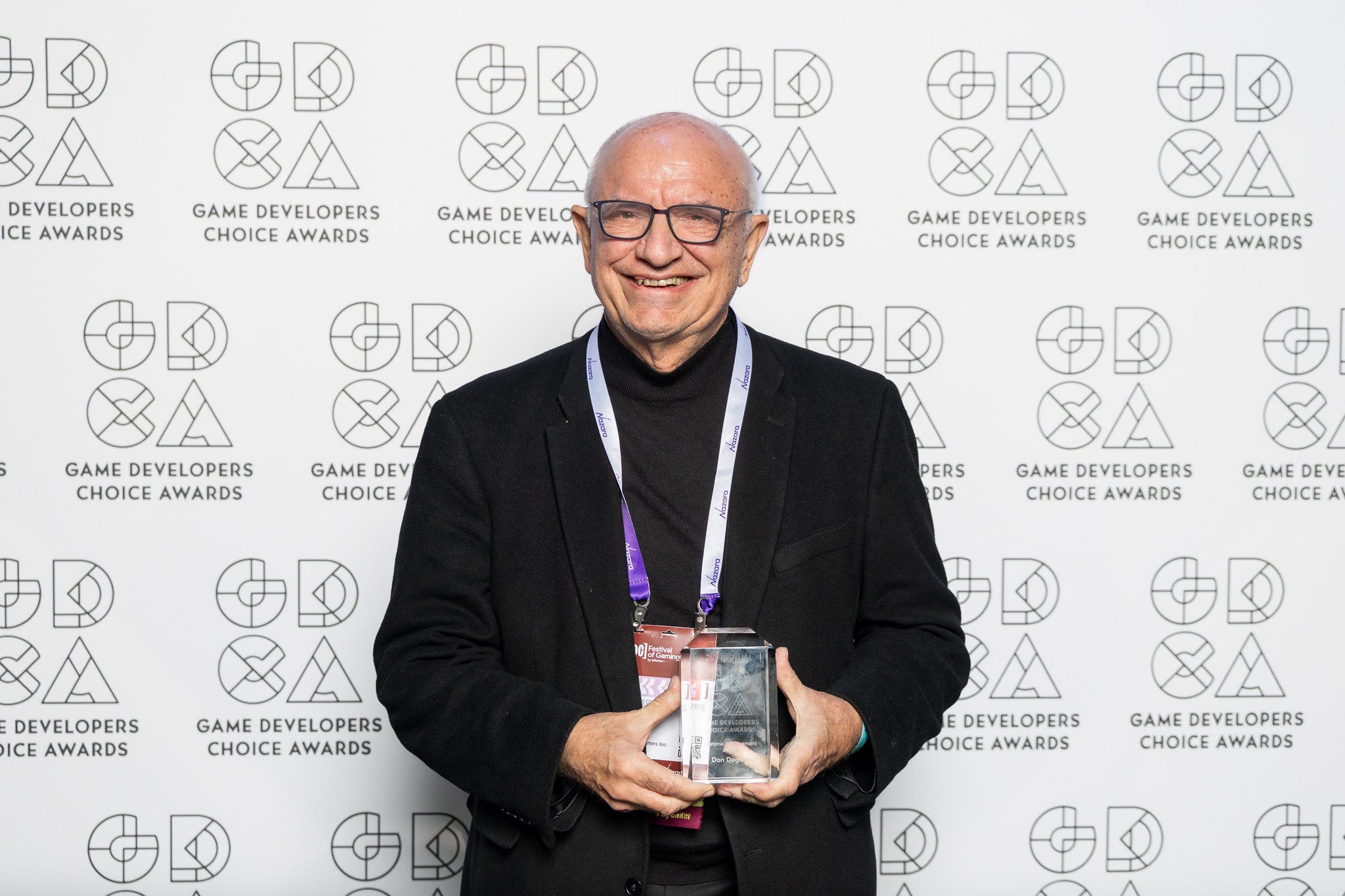
At last week’s GDC, I asked the veteran game developer Don Daglow why he is so hopeful about a game industry wracked by layoffs and studio closures, an industry he acknowledges is in tough shape for many people.
Daglow, 73, has seen a lot. He developed the first interactive baseball game on a mainframe in 1971, was one of the first programmers at Intellivision, and, in the 1990s designer of the first graphical massively multiplayer online game, Neverwinter Nights. He’s still making games today.
On Thursday night, Daglow received a Lifetime Achievement Award at the Game Developers Choice Awards and tried to turn it into a collective rally for a brighter future.
“Industries rise and fall and rise again,” he had said on stage. “I’ve been laid off. I’ve been fired. I’ve built great things with great people and then watched them be torn down. We retain our passion for games through triumph and disaster, because we know games mean something.”
He ended his speech leading the crowd in a collective chant: “Let’s build something great!”
After the speech, Daglow went backstage, where each of the night’s award winners posed for a photo and answered questions from a few reporters.
I wanted to understand where his hopefulness came from.
“I think it starts from one thing,” he said. “My parents met and fell in love during the Depression. Both of them lost their careers to the Depression, and yet they had a positive attitude out of it.”
Swiftly, he also thought of a second thing: The near-fatal collapse of the U.S. video game industry in 1983, when the home console market of Atari and Intellivision crashed, only to be reborn two years later with the introduction of the Nintendo Entertainment System.
“Going through the crash and surviving that in ‘83 and seeing the industry rebuild,” Daglow said, “If we can survive that, we can survive anything.”
The game industry crash doesn’t get discussed much these days, but amid the last few years of mass game industry layoffs and studio shutdowns, it’s relevant.
I asked Daglow to describe what it was like to experience the 1983 downturn.
“The console business completely collapsed,” he said. “It was the first generation of consoles and multi-cartridge systems. We were part of the toy industry, and all the rules of the toy industry applied. In the toy industry, if you’re a popular game and then it just starts to fade a little, then they just sell it off.”
Did he think it was over?
“I believed I was going to get the gold watch from Intellivision and be there my whole career,” he said. “So I was completely deluded and out of my mind. And, when it crashed, I thought my career was over.
“And then I was very wrong. I had to go to a little startup called Electronic Arts.”
Daglow believes he’s seen the worst, and is confident better days will follow.
Note: I spoke to some fascinating people at GDC and will be telling their stories in select editions of Game File over the next couple of weeks.
Item 2: Subnautica studio CEO gets his job back
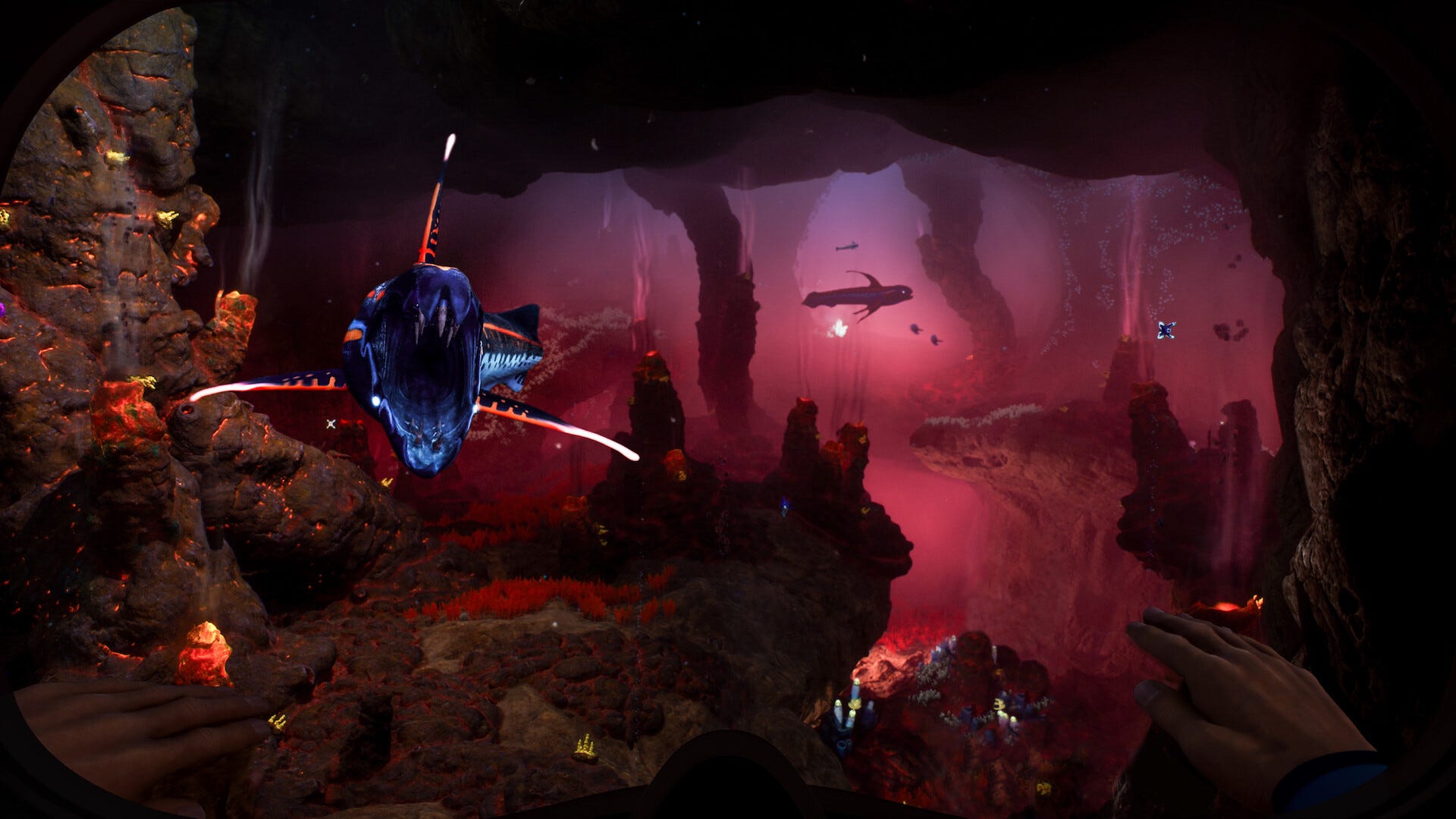
Ted Gill, the fired CEO of Unknown Worlds (Subnautica), must be restored to that position and given full rein to release the studio’s next game, Subnautica 2, into early access when he deems fit, a judge in Delaware’s Court of Chancery ruled on Monday.
Gill, along with Unknown Worlds co-founders Charlie Cleveland and Max McGuire, sued game publisher Krafton last year for breach of contract, after the Korean giant fired the trio.
The developers maintained they’d been fired so that Krafton could avoid a performance-based payout of up to $250 million, which they hoped to come close to hitting with an early access release of Subnautica 2. The underwater survival adventure is the most-wishlisted game on Steam.
Krafton had accused the execs of being absentee and blocked the early access release. The company later accused the trio of data theft for downloading emails and files when they were fired.
Vice chancellor Lori Will’s 91-page ruling sides with the ousted execs. It details how Krafton CEO Changhan Kim felt “taken advantage” of by the earnout deal, consulted ChatGPT for advice about how to get out of it and ignored warnings that trying to end the deal would expose Krafton to a lawsuit. The result: a breach of contact that Will says will be rectified by Gill getting his old job back.
The other two executives’ roles were not restored, though the judge said Gill has the right to bring them on as advisors. The court has not yet ruled on whether Gill, Cleveland and McGuire are entitled to any financial damages.
In a statement to the press about the ruling, Krafton said it looked forward to “pushing out the newly updated version” of Subnautica 2 “as soon as possible.” The company noted it “respectfully disagree[s] with today’s ruling” and is “evaluating our options as we determine our path forward.”
The Monday decision also described the inevitable discomfort of what’s to come with Gill back working at a Krafton-owned studio. It’s the best possible scenario, Will wrote.
After Gill’s ouster, Krafton had put Steve Papoutsis, already head of Krafton-owned Striking Distance, at the helm. Papoutsis, chancellor Will wrote, “had neither played an Unknown Worlds game nor overseen the development of an early access title.” Thus, she reasoned:
Restoring as Unknown Worlds’ CEO Gill will cause tension with the parent company given the obvious bad blood between the parties. But corporate friction does not excuse a material breach of contract. Nor does it override a bargained-for specific performance clause. Krafton and Gill are sophisticated commercial actors. They can—and must—act in good faith to navigate their remaining contractual relationship.
The harm to Unknown Worlds absent specific performance is even more palpable. Unknown Worlds is being run by a part-time CEO who manages another studio and had never played Subnautica before his appointment. Key staff members have quit, and the early access release of Subnautica 2 has been put in jeopardy.
On balance, the equities heavily favor restoring Gill to stabilize the studio. Before Krafton’s intervention, Subnautica 2 was on track for its intended early access release under Gill’s leadership. Restoring his position and operational control will allow the studio to launch its highly anticipated game using the community-driven development model that made it successful.
Item 3: In brief…
👀 Jay Ong, who is still listed on LinkedIn as the head of the Disney Games Group, is suing Disney for $40 million over alleged discrimination that resulted in a lower pay bonuses, The New York Post reports.
Per the Post, Ong claims that Disney praised his performance at the gaming division but tried to embarrass him and drive him out of the company. The outlet notes: “The 56-year-old gaming exec claims despite generating revenues of half a billion dollars his bonus was reduced to $325,000 in 2025 from $367,117 in 2024. His incentive bonus was also reduced from $770,000 to $620,000, according to the filing.”
Neither Ong nor Disney replied to requests for comment.
🎮 Arc Raiders studio Embark is parting ways with one its chief creative officer, following allegations of sexual misconduct, though the studio also said its investigation was unable to substantiate the claims, IGN reports.
🚫 Indie studio Speculative Agency is returning funding it received from Microsoft for its upcoming game All Will Rise, in solidarity with the No Games For Genocide boycott of the tech giant’s Xbox operations, PC Gamer reports.
The boycott was spurred last year by Microsoft’s contracts with the Israeli military and allegations its cloud tech has been used to facilitate the killing of Palestinian civilians.
The gaming division isn’t specifically accused of wrongdoing, but is seen as a target to get the parent company to feel pressure. [Read Game File’s 2025 interview with an Xbox developer applying pressure from within]
Last April, the developer of Tenderfoot Tactics pulled their game from Xbox in protest.
Last September, Microsoft said it would block an Israeli military unit from using its tech for mass surveillance of Palestinians, following reporting in The Guardian.
🎬 The 1st Annual Cinematic Awards for video games were held last week and the winner for Excellence in Game Cinematics went to… Death Stranding 2. [See the full list of winners]
I'm so happy to see a partial win for the Subnautica devs. When I read that, I was fist-pumping and shouting, annoying and confusing my wife.
I've been following Unknown Worlds since they were Half Life modders making their Aliens vs Marines asymmetric PvP game. I really hope they get one last success before they dip and give their parent company a big FU on the way out after making their bonus.