

31 hours with the spit-shined Mina the Hollower (and 34 with the four games that came before it)
A review of a stunning new Super Nintendo-style epic made by a studio that keeps getting better

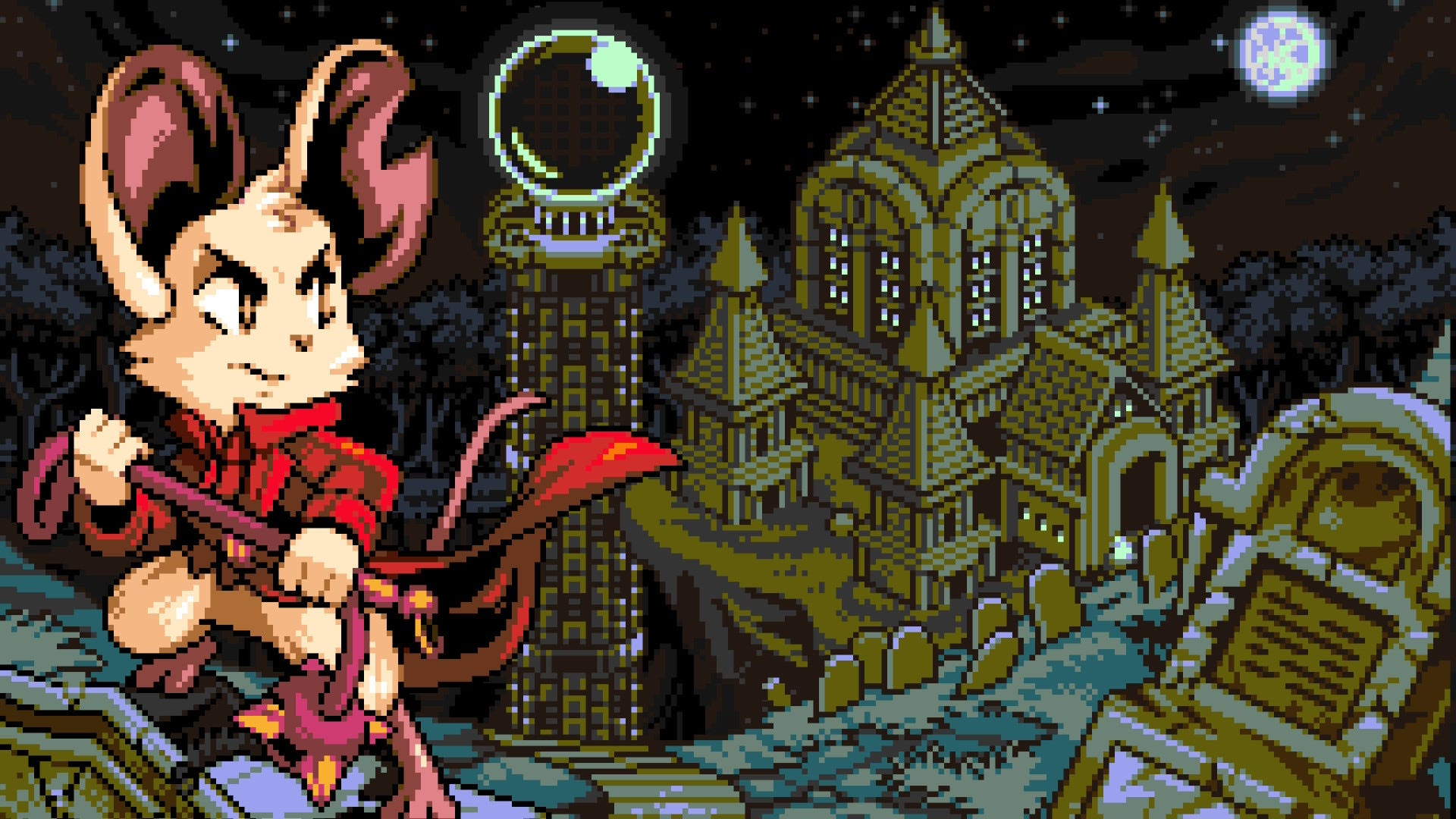
To truly appreciate Mina The Hollower, an extraordinary new throwback of a game, I sent myself to Yacht Club University.
That’s not a real institution of higher learning, but it’s the best way I can explain much of the past several weeks as I prepared to play Mina by playing the four biggest game previously made by studio Yacht Club Games.
I had expected Mina the Hollower, in development for six years for PC and consoles, to potentially be something special.
A demo I tried in March had felt great. Mina the Hollower had an old-school premise: a singular move for its hero that felt so good to control and so rich with possibilities that, in the hands of skilled designers, it could be riffed on in various ways for the length of a full game.
Mina’s core maneuver, her hollowing, made her sort of an upside down Super Mario. Nintendo’s hero jumps through the air, discovering power-ups at the apex of his jump by bonking overhead blocks, then defeating enemies by landing on them.
Mina essentially jumps into the ground, digging (“hollowing”) into the earth to fetch buried treasure, then burrows for a short distance to emerge on the other side of a wall that hides treasure or an enemy that needs some battering.
I wanted to understand how good Yacht Club was at making games. I wanted to see how far they’d come. If Mina was terrific—as I predicted it might be—I wanted to feel how they got there, one button press at a time.
On May 6, 21 days before the writing of this review, I checked with Yacht Club Games co-founder and programmer David D’Angelo, to ask which of the studio’s games I should play to truly appreciate the new one’s design.
“Hmmm all of them?” he wrote back.
“Starting with Shovel Knight definitely is helpful,” he continued, referring to Yacht Club’s first game. He gave me a link to a spreadsheet of over 400 cheat codes that could help me out, if I found the game too tough.1
“Most folks say Specter of Torment is the least difficult and quickest to finish in terms of playtime, and [it] refines much of Shovel Knight,” he told me. “King of Cards is a big celebration of everything we did in [the Shovel Knight compilation] Treasure Trove— might work for you better if you’re a fan of shorter, Mario-style courses. And it’s probably the closest to Mina in terms of polish.”
So that was that. Four games, none of which were required. Mina is a whole new game in a whole new world, best I can tell. I’d barely played that first Shovel Knight before and never the other three.
I just thought it’d help. It did. It turns out that playing a game studios major works before their latest is very illuminating.
Keep reading with a 7-day free trial
Subscribe to Game File to keep reading this post and get 7 days of free access to the full post archives.