

Netflix proposes a different kind of single-player video game: 40 minutes long, scary, streamed to your TV
Plus: The next Star Wars racing game is a rogue(squadron)like

I started and finished Netflix’s next video game—arguably its most interesting video game—in a hotel room in Manhattan last week.
It took me less than an hour.
I died twice.
The game is called Unhinged, and if you’ve learned anything about what Netflix has been doing with video games in the last few years, well, unlearn that.
Unhinged isn’t a mobile game offered as a free perk to Netflix subscribers.
It’s not a game aimed at little kids, a market Netflix has been targeting by pitching parents the prospect of kids’ games that have no micro-transactions or ads.
It’s also not one of Netflix’s new wave of party games—Pictionary, Boggle, Party Crashers, etc—that are streamed from Netflix’s servers to smart TVs, with players’ phones turned into controllers that display simple inputs.
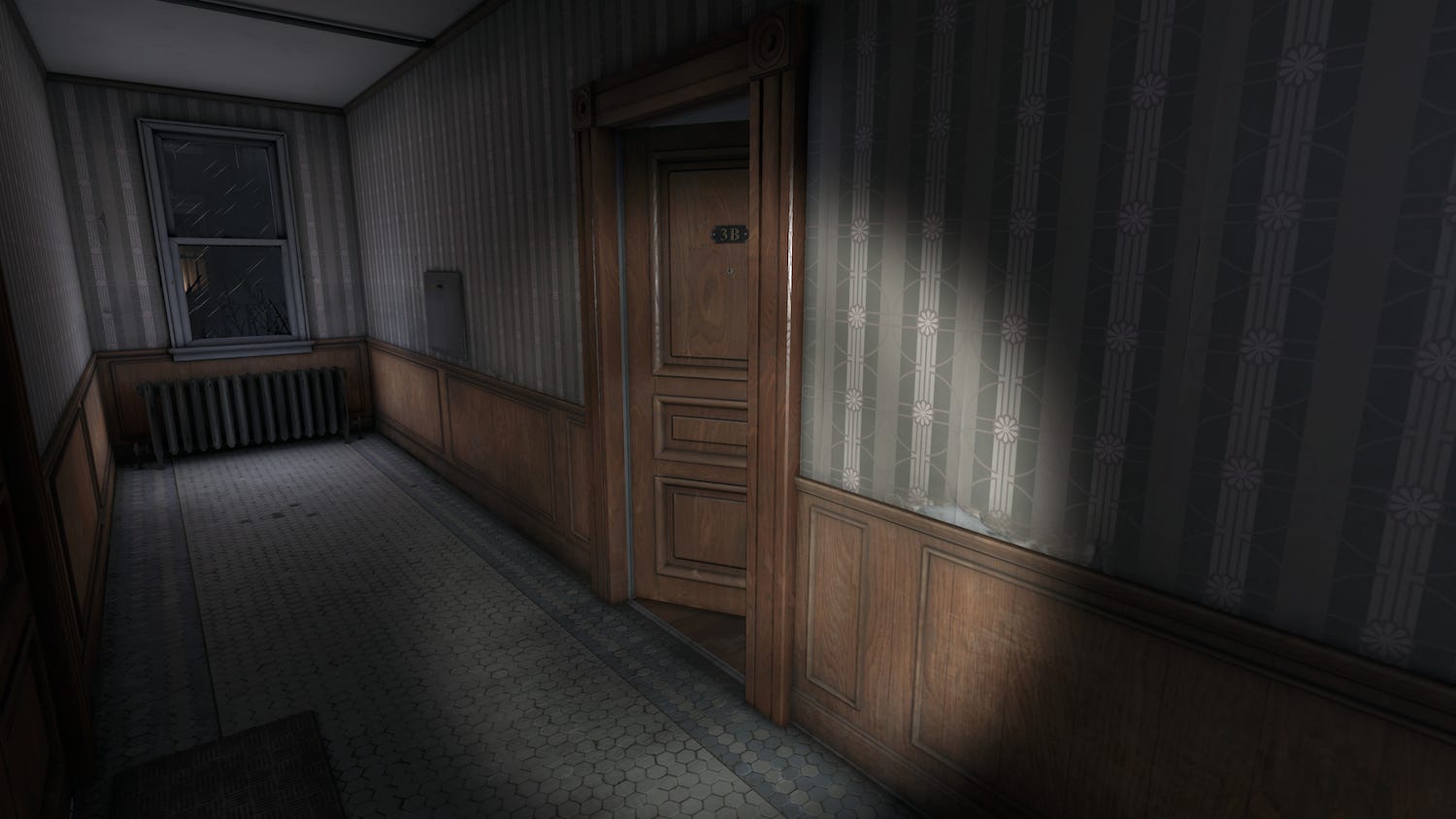
It’s a first-person suspense game with decent enough 3D graphics that you could imagine playing it on PS4 or PS5, though you don’t use a controller to control it. You use your phone as a combination flashlight and in-game phone.
It’s developed by Netflix-owned game studio Night School (Oxenfree). The graphics of the game are streamed to your TV. The virtual phone interface is streamed to your phone.
You playing as a woman named Ava (voiced by Zoë Kravitz) who is trapped in her apartment building during a hurricane. Ava’s neighbor is not answering their door. Someone else is creeping around in the building.
Something is very wrong.
But Ava is at least in touch with a friend via her phone, as she tries to plot an escape.
It’s not a shocking set-up, but it is a quickly comprehensible one. And it works. Its action, careful and slow, interrupted by moments of panic, held up over a streaming connection when I played it last week.
To play Unhnged, you point your phone at the screen as if it’s a flashlight. Where you point is where the in-game beam shines. You’re helping Ava see, and you’re pointing at what you want her to interact with or where she should go. Your phone is also basically Ava’s phone, displaying a fake phone interface through which Ava receives calls and texts.
The real-phone-as-controller-as-fake-phone interface is neat. It’s a shame Netflix hasn’t shown it in the game’s trailer. Moving a real phone to simulate a flashlight/telephone feels like playing a descendant of a Wii motion game or a Wii U double-screen experiment. In fact, when I played Unhinged, its director, Sam Warner, straight-up cited a design trick from Ubisoft’s Wii launch game Red Steel. In that game, players could hold the remote-shaped Wii controller to their ear and listen as an in-game character issued commands through the controller’s speaker. “That was magic,” Warner said. “That was the kind of thing that we are inspired by.”
A team of 20 developers at Night School worked on Unhinged for about 18 months, following an earlier phase of prototyping the phone-flashlight interface.
Netflix’s brief-game bet
The biggest novelty of Unhinged is its brevity. Netflix argues it’ll help get more people to play games.
“Our vision for this is: How [do] we take people who love horror and thriller films and TV shows and bring them closer to interactivity?” Sean Krankel, head Night School told me.
“We went, ‘Well, what’s one of the things that’s the most daunting about games in general to a lot of folks who may not even play games? And it’s like, not just the skill threshold, but also the time investment. If people are on Netflix expecting 30 minutes to an hour of a show or a film or a series, this really kind of fits inside of that.”
Unhinged will be available in Netflix’s “Games” section on June 30, and the company see how it does. There are no sequels locked in, no set of shorts releasing alongside this one. “This doesn’t mean that we are now inherently going to do only short games forever,” Krankel told me.
But, what if?
About seven years ago, many of the power-brokers in the traditional video game industry quaked at the prospect of Google and Amazon throwing their financial and technological might into the field. How might they disrupt an industry of EAs, Xboxes, Nintendos and the the like? Those fears were overblown. Google’s game-streaming platform Stadia died quickly. Amazon pivoted its gaming plans a dizzying number of times. Those giants failed to outmaneuver the veteran companies.
But Netflix, having also pivoted a couple of times, brings a new experiment with Unhinged. What if the secret to getting more people into video gaming overall is to put shorter single-sitting video games in front of them? What if Netflix is on to something?
Item 2: Slay the Empire
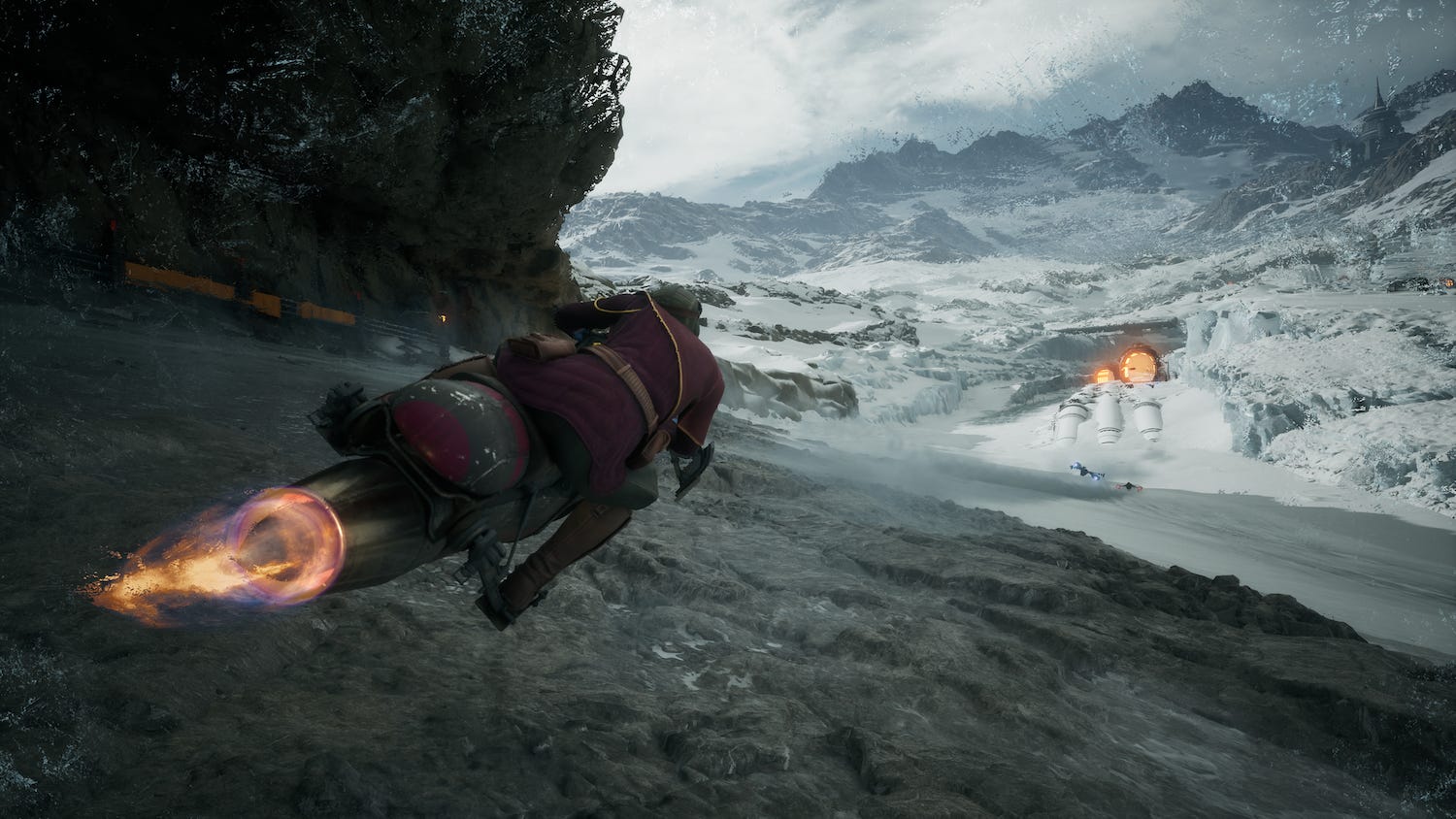
The most shocking thing about the upcoming Star Wars Galactic Racer racing game is that it’s a roguelike.
Excuse me.
To use the term bandied about in press releases, promotions and by members of the game’s development team at Summer Game Fest earlier this month, it’s a run-based game.
(It’s a roguelike.)
Galactic Racer, which can be played in a quick-race arcade mode or in multiplayer has a solo campaign that is is “inspired by other run-based games like Hades or Slay the Spire, those sorts of things,” Matt Webster, head of Galactic Racer dev studio Fuse Games told me, as I played the game at SGF.
Roguelike, run-based… the idea is that, as with the great games Webster cited, Galactic Racer sends players through a semi-randomized, branching campaign, where players build up their character’s abilities throughout the run, but where failure is likely. And, as with those games, each failure leads to new runs where you retain some of the ability progression you achieved during your past attempts.
In each run of Hades, you’re a godling who battles through chambers filled with the friends and foes of Greek mythology, getting stronger after each run-restarting death.
In Galactic Racer, you’re an entrant into the Galactic League racing tournament set across multiple Star Wars planets some time after Return of the Jedi. If you fail, you re-enter the circuit, but with a better speeder and improved racing perks and prowess each time. Your exact build of your previous racer will be lost, but some upgrades and unlockes carry over.
Each planet in the game offers a randomized, branching sequence of events. An event might be a traditional lap-based race set near a crashed Star Destroyer, or an eliminator that requires finishing in the top three. Perhaps a field test for running the vehicle’s supercharged ramjet for as long (and fast) as possible.
As players win races, they earn parts and currency that they use to upgrade their racing vehicle, unlock or add parts, change their racer’s style or in some other way alter the abilities and stats associated with speed, cornering, shields and such. Each run is meant to feel like you’ve crafted a unique racing build.
You don’t exactly die and revive with each run. You’re no Greek deity. But you can only crash your speeder so many times before your run in the league has failed and you must start over, slightly improved for trying.
Fuse Games has strong racing game pedigree. It’s staffed by veterans of the Burnout and Need for Speed games, some of whom had moved to non-racing work at their last employer. The idea to make a Star Wars game emerged from some of the team’s prior efforts on EA’s Battlefront series, mixed with a hope to make the first new Star Wars racing game in ages, Webster said.
As for the roguelike (run-based!) structure, Webster said they wanted a campaign format that felt “contemporary, something that drove replayability, something that synchronized into that core mastery experience-that mastery feeling that you get out of getting better and better at racing.”
Note 1: Ahead of reporting this item, I mentioned in Game File’s reader chat that this game’s a roguelike. Surely there’s a Star Wars pun to be made? I floated the inherently terrible R2 haDes 2 and the only slightly better RogueSquadronLike. Credit to reader Conway Twitty for the Slay the Empire riff. I liked that one best.
Note 2: In a game-preview first, PR for the game sent me a capitalization guide to inform my Galactic Racer preview. This is style set by Lucasfilm themselves. I’ll have you know that “podracer” is NEVER capitalized. Same with landspeeder, speeder bike and skim speeder. These are the four main vehicle types in the game, but they’re not proper nouns, people.
I unironically think this sounds like a really smart idea, and launching the format with horror in particular is inspired. It's arguably the most viral game genre, considering how well horror video game reactions and analyses rake in views.
Horror fans are also more receptive to short-form, experimental content than a lot of gamers. So much of horror gaming YouTube is people plumbing the depths of Steam and Itch.io for indie horror gems. A 40-minute playtime isn't uncommon in that scene. If anything, it can be desirable for people who want quick thrills over the endurance campaigns of traditional triple-A survival horror.
I'm sure there'll be some deserved cynicism with Netflix attached, but man, for me personally, mentioning Wii and Wii U games has given me a mighty need to try this. I love a good gimmick and I could see myself getting real giddy over the phone integration.
Horror fans can definitely be discerning about the horror itself, but again, they may be more open minded to the actual gameplay and presentation. They're probably the perfect audience for Netlix to try this on.
Star Wars Galactic Racer sounds promising! I’m surprised at the roguelite (Slay the Empire) elements, but having different objectives for each race can be a fun way to shake up the racing campaign. I hope the game will also let you drive on tracks for the traditional racing experience.