

A Nintendo producer's childhood Mario memory helped shape a Switch 2 Donkey Kong hit
At GDC, Nintendo detailed the creation of Switch 2 stand-out Donkey Kong Bananza

SAN FRANCISCO - Where does a Nintendo video game come from? At GDC today, in front of several hundred game developers and other attendees in the Moscone Center, a pair of Nintendo developers gave a sort of game design origin story for last July’s critically acclaimed Switch 2 game Donkey Kong Bananza.
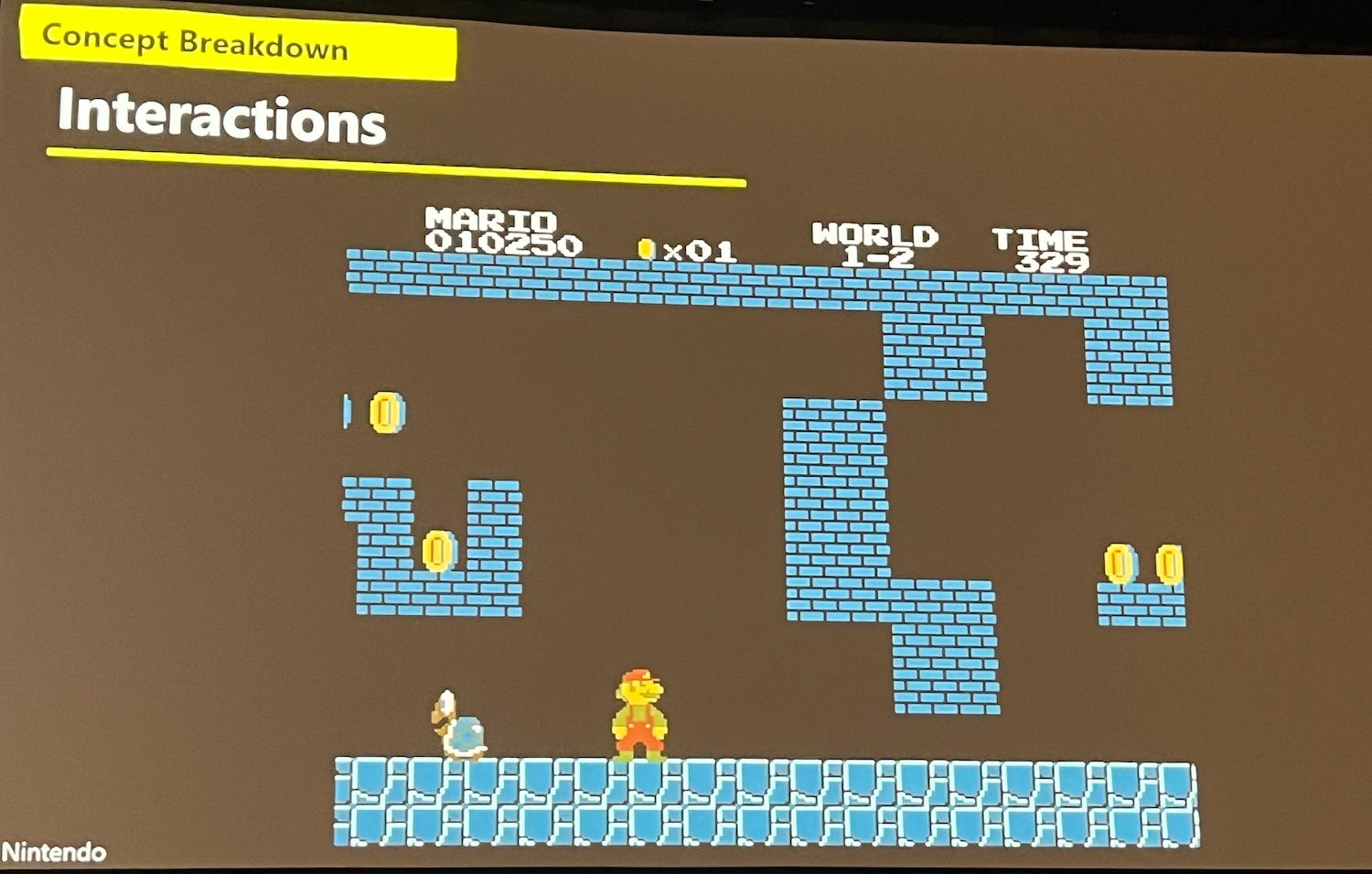
One stand-out moment: When Nintendo producer Kenta Motokura explained the influence of Super Mario Bros.’ iconic first underground level, world 1-2, on him when he was a kid.
Yes, Nintendo has been making classic games long enough that its most senior developers are now drawing inspiration from Nintendo games they played as kids.
Back while Motokura and his team were making the 2017 Switch game Super Mario Odyssey, he said, they were considering the implementation of a destroyable rock. The rock would crack when hit, the virtual object changing its look bit by bit as Mario smashed it with a hammer.
Motokura wasn’t sure this was good enough. He said he had recalled the iconic first underground level of Super Mario Bros., world 1-2 (pictured above)
“I’ve loved this scene since I was a kid,” he said in Japanese which was translated into English. “You can interact with almost everything on the screen, and, depending on how you go about that, there are multiple ways to proceed.”
(Players of that level know that you can smash squares of blue bricks, even crack the ceiling to help find a game shortcut.)
Mario Odyssey’s engineers, urged to come up with a more impressive approach to destruction, came up with a new way for that crackable rock to work. In the final version of Odyssey, the player can throw a hammer at a specific chunk of yellow rock and chip away at it. Cube-shaped sub-sections are destroyed bit by bit.
This approach excited Motokura.
It suggested a game design where, instead of the player character interacting with the specific spot, or point of a virtual object they could then interact with a surface, impacting multiple points.
And that helped get things rolling to make the Switch 2’s Donkey Kong Bananza.
Bananza was developed by a team at Nintendo that previously specialized on 3D Super Mario games. The new game is distinct in that it allows player protagonist Donkey Kong to rip apart the terrain of massive 3D worlds: punching through walls, digging into the ground, tearing boulders out of hills and throwing them at enemies.
Nintendo designers pack GDC conference rooms each year, often describing how their game design ideas converge with their technological engineering to enable ground-breaking games.
In this case, they were explaining how they made a game literally about breaking ground.
Keep reading with a 7-day free trial
Subscribe to Game File to keep reading this post and get 7 days of free access to the full post archives.