

One key chart showing the game industry's struggle
And six new game demos (that you can play) that help me remain hopeful about gaming's future


I could tell you about some exciting upcoming video games.
Or I could tell you about a depressing recent assessment of the state of the video game industry.
For a reporter on the gaming beat these days, these are common options. How about I try to do both?
Let’s cover the bad news first.
Industry expert Matthew Ball has been in the press a lot lately, after he published an “early access” version of his annual state of video gaming report. Look, those EA developers long ago pondered if a video game could make a person cry, and while I don’t know if that’s been achieved, I have no doubt that Ball’s report on the game industry can bring some tears.

Here’s one of the news headlines that came out of Ball’s report :
Here’s a bleak sub-hed from another:
The industry is investing less in new game development than they have in recorded history
Across the 160 or so slides that comprise the report, you can see some rough stuff. Ball’s just the messenger here, mind you.
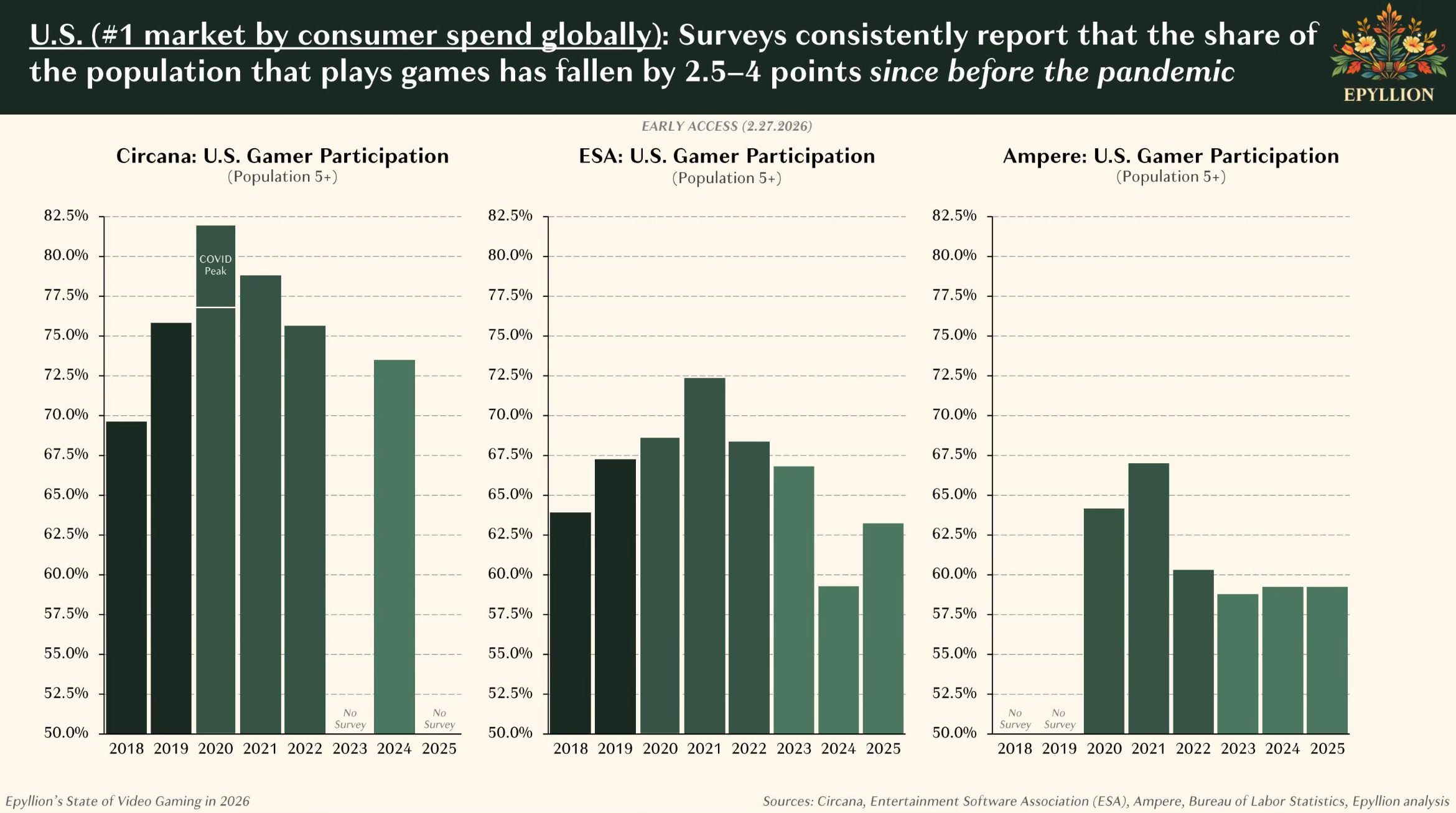
For example, here’s a triple-chart showing the declining percentage of people in the United States who play video games:
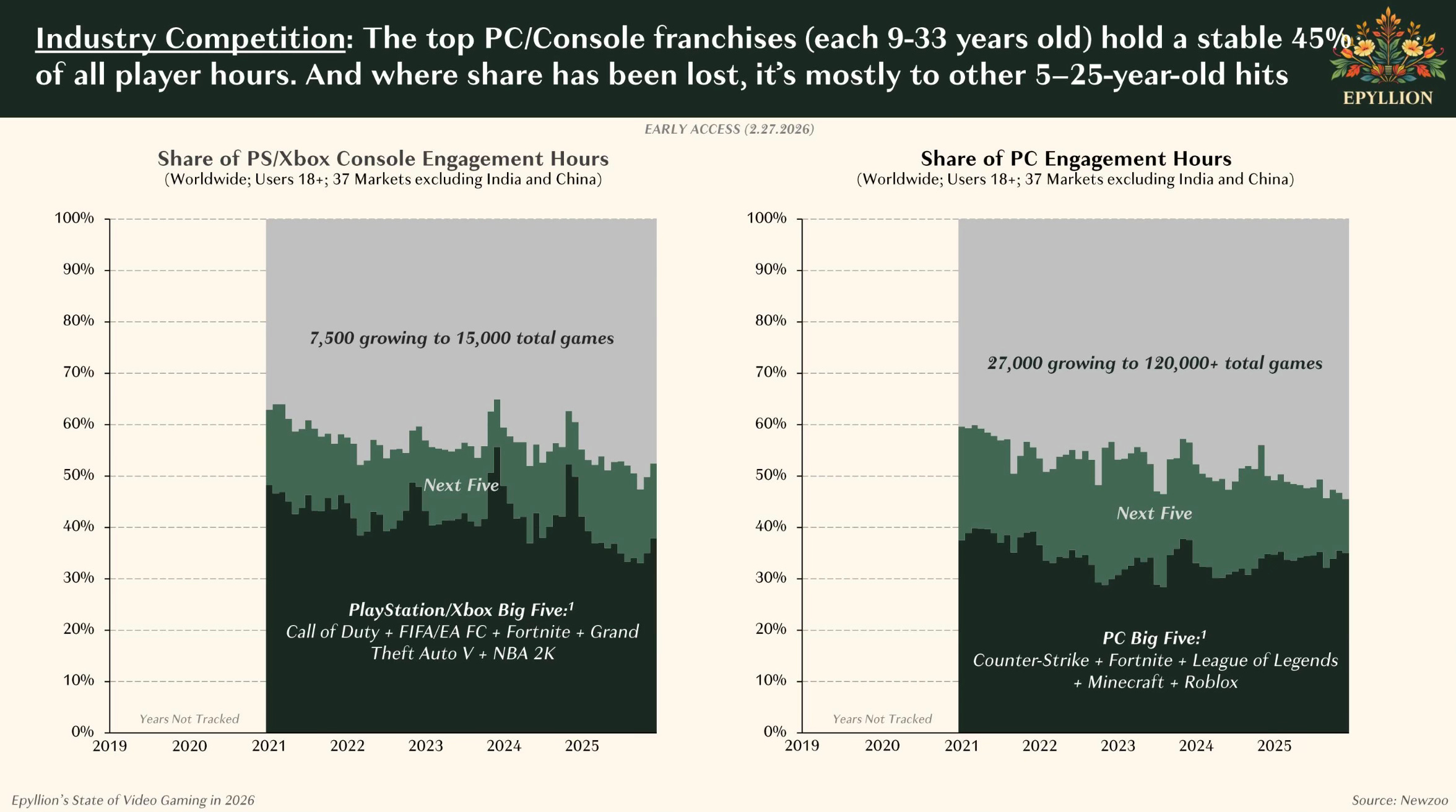
Here’s a chart showing how just 10 games in a given year account for half the playing time on PlayStation, Xbox and PC, year after year.
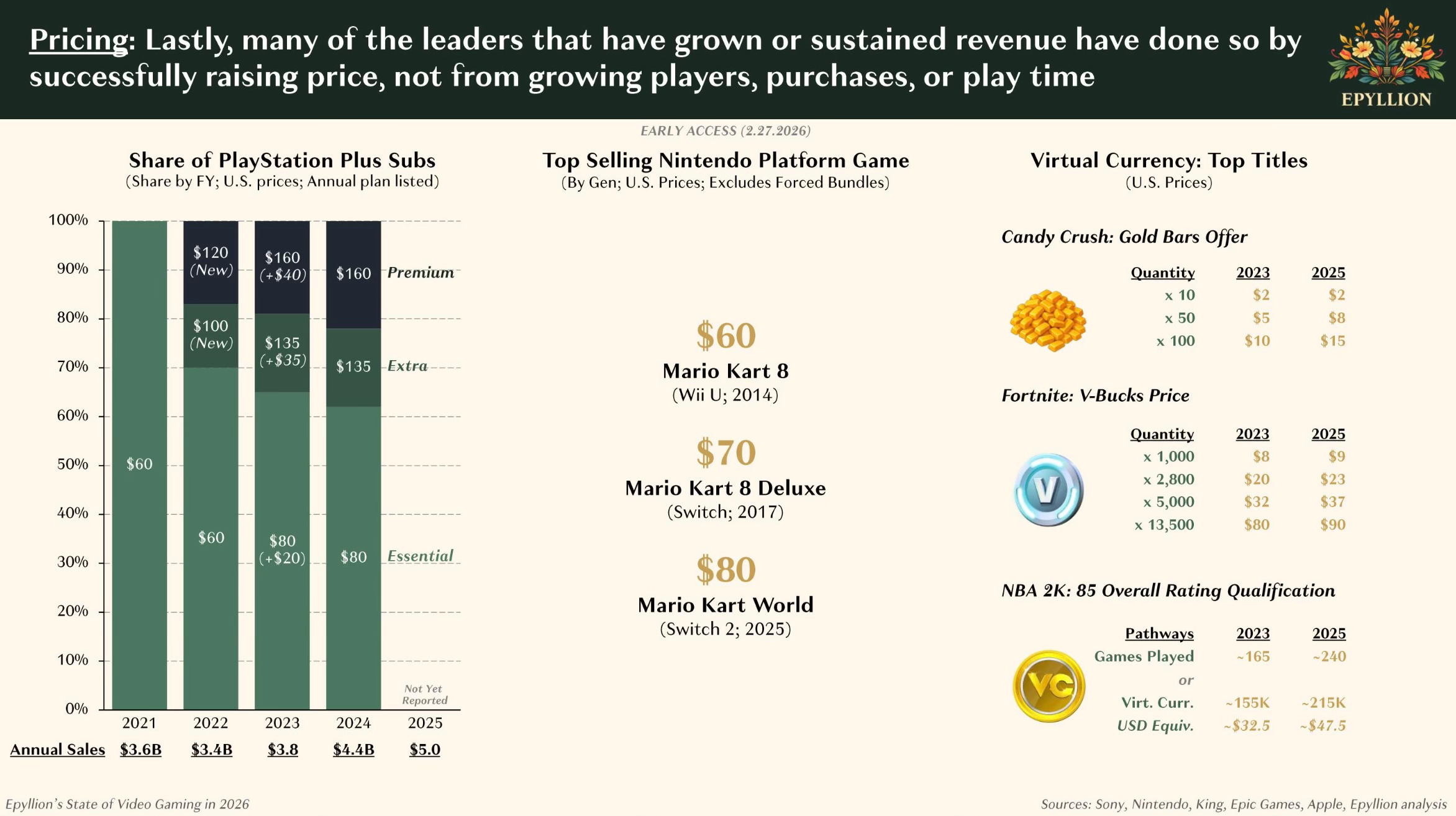
Here’s one about how gaming is just getting more expensive for players as prices go up on subscriptions, microtransactions, etc.
The running theme is that the traditional games industry, with its established publishers and developers and regional markets, its consoles and phones and PCs, is in many ways simply tapped out and everyone’s trying to squeeze more out of a player base that isn’t growing—or at least isn’t growing in most of the parts of the world where gaming’s biggest business was done.
A couple of weeks ago, Ball and I exchanged some messages about his report. Last week, he contacted me to share that he added a slide. He felt like the new one, slide 31, showed how even some recent good news about the game industry might be misleading.
Take a look. This one took me a minute to absorb.
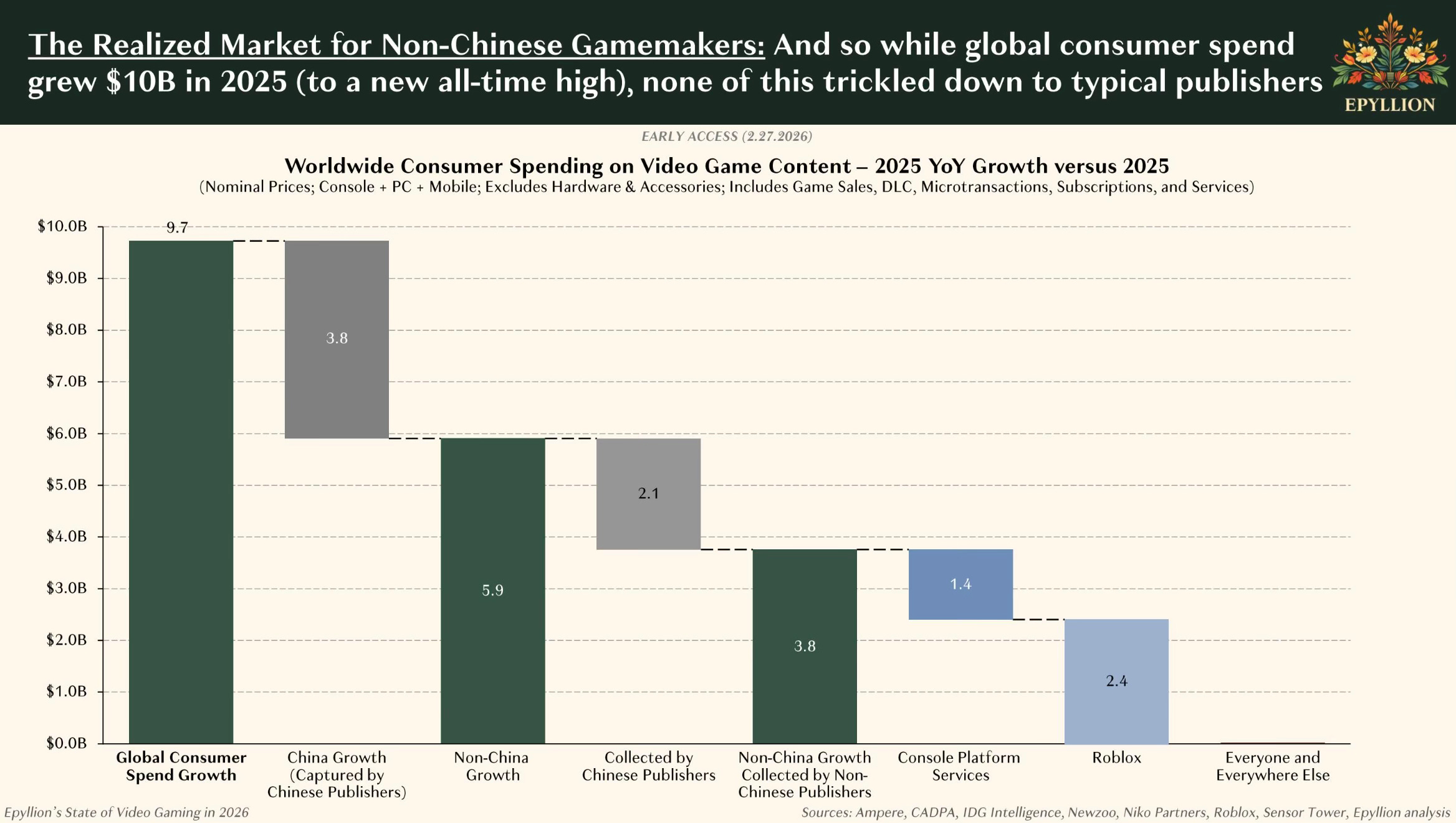
On the left, you’ll see actual games industry revenue growth in 2025 (yes, it went up), but then Ball subtracts growth from a few sectors to see what’s left.
“The core thesis of that section is that headline growth rates cover up what has really been a shrinking revenue pool for most developers and publishers over the last six years,” Ball told me today, when I asked him about this slide.
“I had a late realization (thanks, Early Access!) that the best way to show this was not 2019 to 2025, or pre- versus post-pandemic, but just to isolate 2025.
Keep reading with a 7-day free trial
Subscribe to Game File to keep reading this post and get 7 days of free access to the full post archives.