

44 hours (unexpected!) with a gorgeous game called MIO
PLUS: Battlefield tops U.S. sales charts, GameStop gets sued, a Wii connects to Domino's and more

I got an email on January 14th that made me laugh.
In it, a well-meaning public relations person was doing their best to promote the game MIO: Memories in Orbit. They had batch-emailed reviewers who had early copies in order to inform them about the game’s “true ending.”
This was a sensible thing to email about.
Many video game reviewers are pressed for time, given that the art they’ve chosen to professionally critique is as time-consuming as sleeping.
Reviewers must juggle 80-hour epics and 15-hour ditties. Work hours run out quickly. A critic might have to settle for reaching just one of a game’s endings, rather than the “true” one. They need time to type about the game’s quality, perhaps put a number on their feelings, then move on. Lord knows there are other games to be playing and reviewing, even during January’s so-called slow season.
And so it was that this helpful public relations official wrote: “When you get to the credits around 12-14 hours, you aren’t done yet. There is more of Mio to experience!”
I laughed when I read this, because I was already 15-20 hours into the game, and I knew that I was not close to the game’s ending.
I wouldn’t reach the not-true ending until about hour 30. I was having too good a time and I was making sure to wander off the game’s main route and take my time.
I could not rush to MIO’s end. It was too beautiful for that…
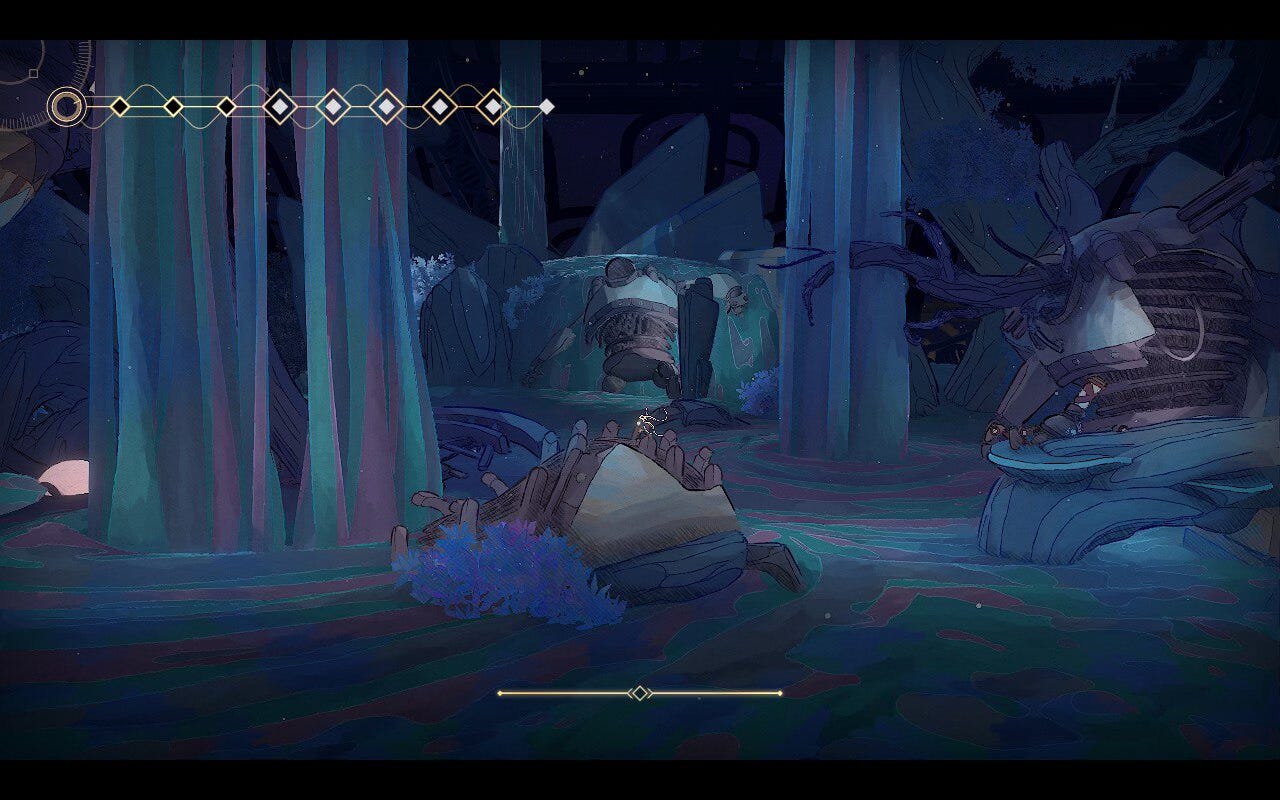
The very best thing about MIO is the discovery it rewards along the way.
If I had to give you an analogy, I guess I’d ask you to imagine wearing the same pair of paints for a couple of weeks (pants that never get dirty or smell bad, by the way) and that each day, you might reach into these pants, discover a new pocket you’d missed before, and in each of those you might fight another $20 bill.
Just how did anyone make pants that can do this?
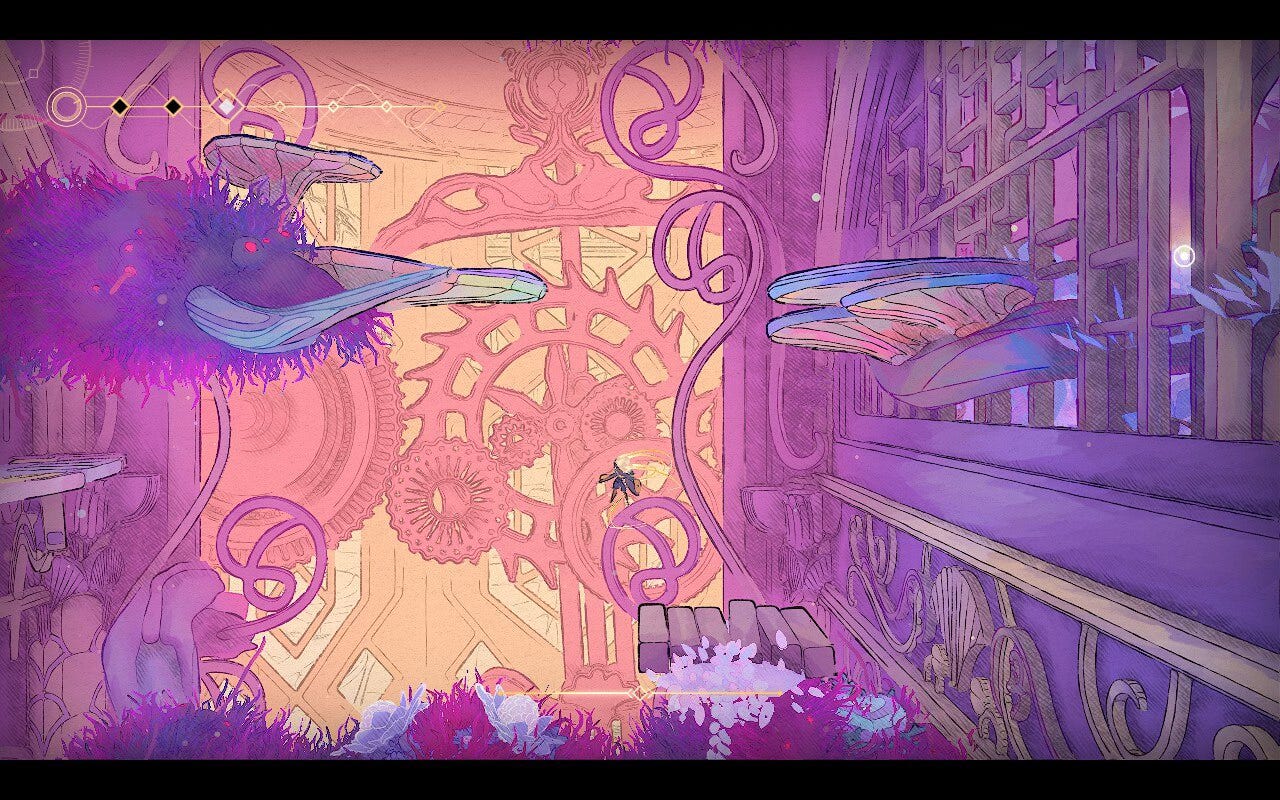
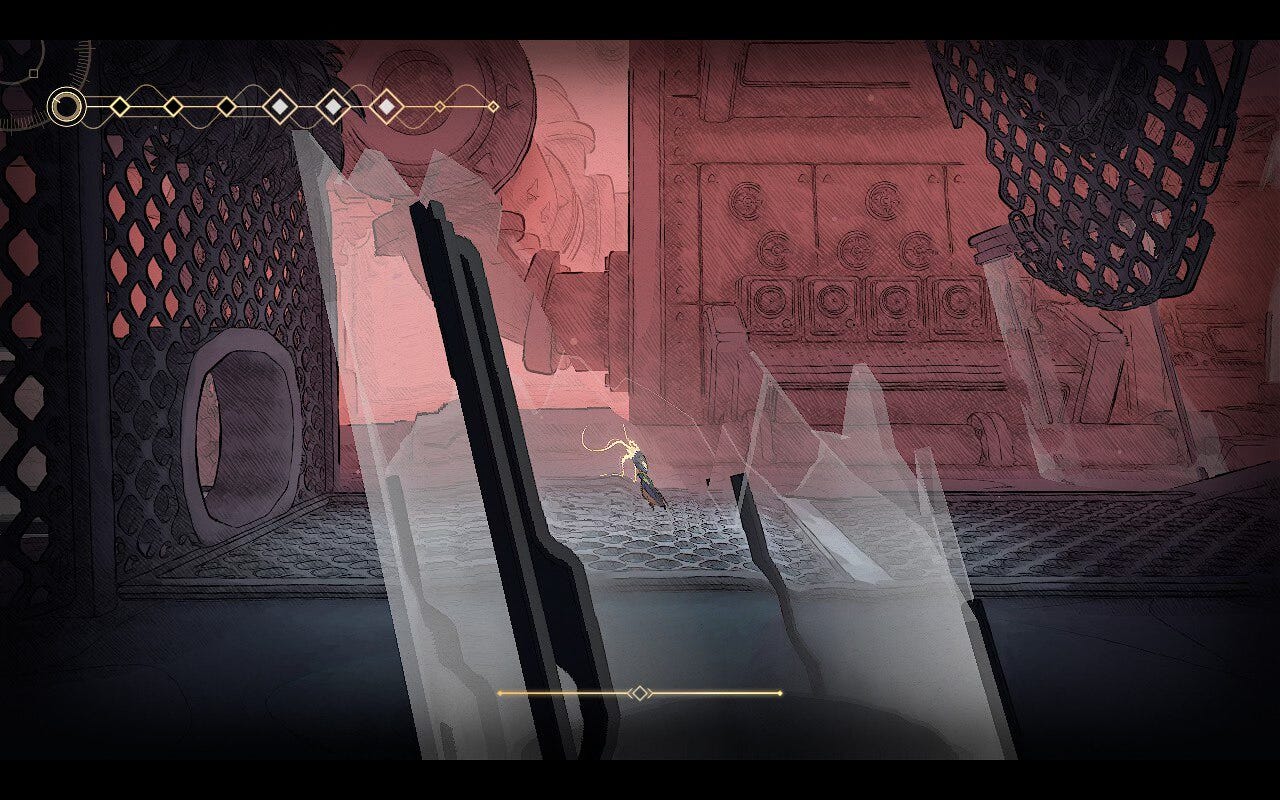
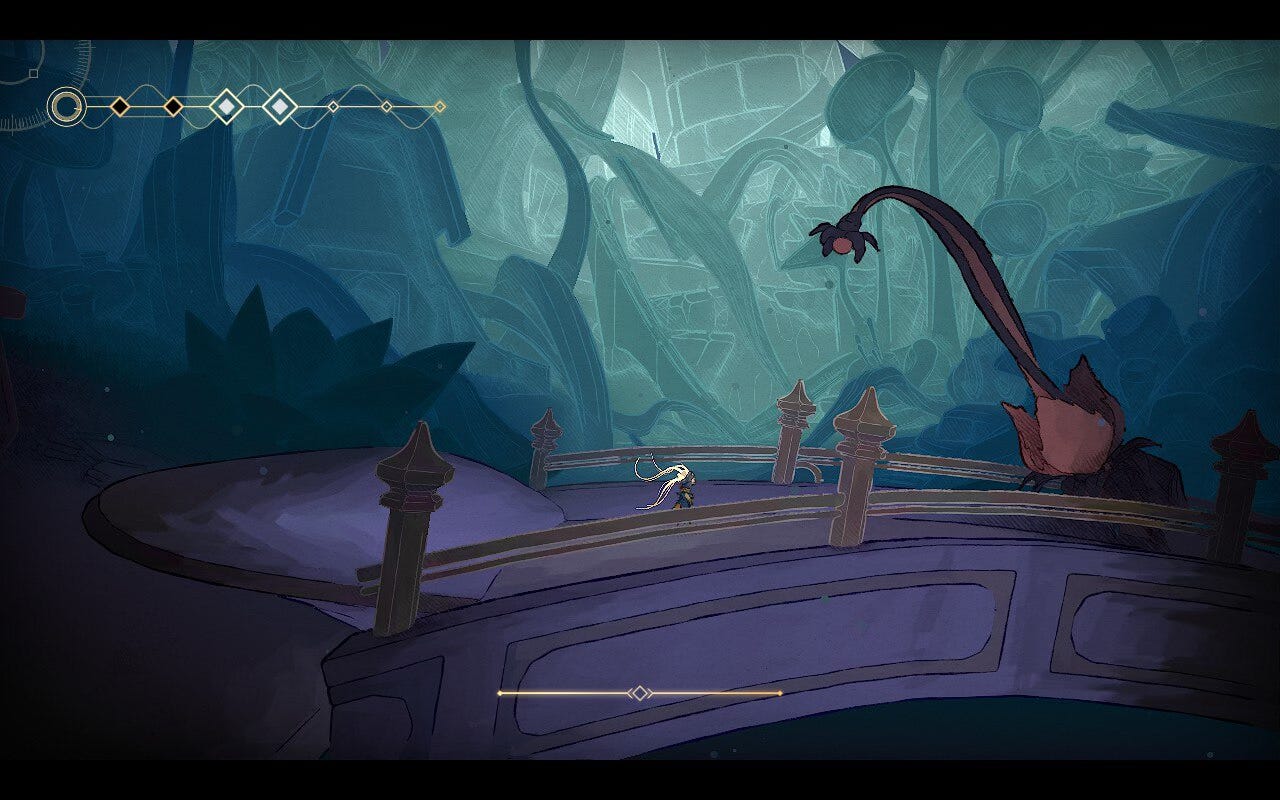
Perhaps I should mention that MIO is a side-scrolling science fiction action-adventure, released several days ago for PC and console. You control a little wisp of a being who has yellow tentacle-like hair. You explore a wrecked space station, talk to robots and try to figure out what went wrong. You fight enemies, using your hair tentacles to fling yourself toward them, then beat them up. You jump around a lot, too, careful not to fall into deadly ooze.
Also, as mentioned, it’s very, very beautiful…


What I’ve described about the game’s setting and combat don’t matter that much. What I prefer to emphasis is MIO’s map, one of the best I’ve experienced in a game in years.
It’s a space station laid out as a layer cake, with aesthetically interesting distinctions—caves, temples, bogs, factories, labels, networks of clear pipes, webs of goo, ice-encrusted cities, a giant black egg leaking a rainbow of fluid—designed by artists with a talent for surprising grandeur.
And it’s dense with secrets, with crannies that become caverns that become shockingly magnificent, entirely optional areas to gawk at and explore.
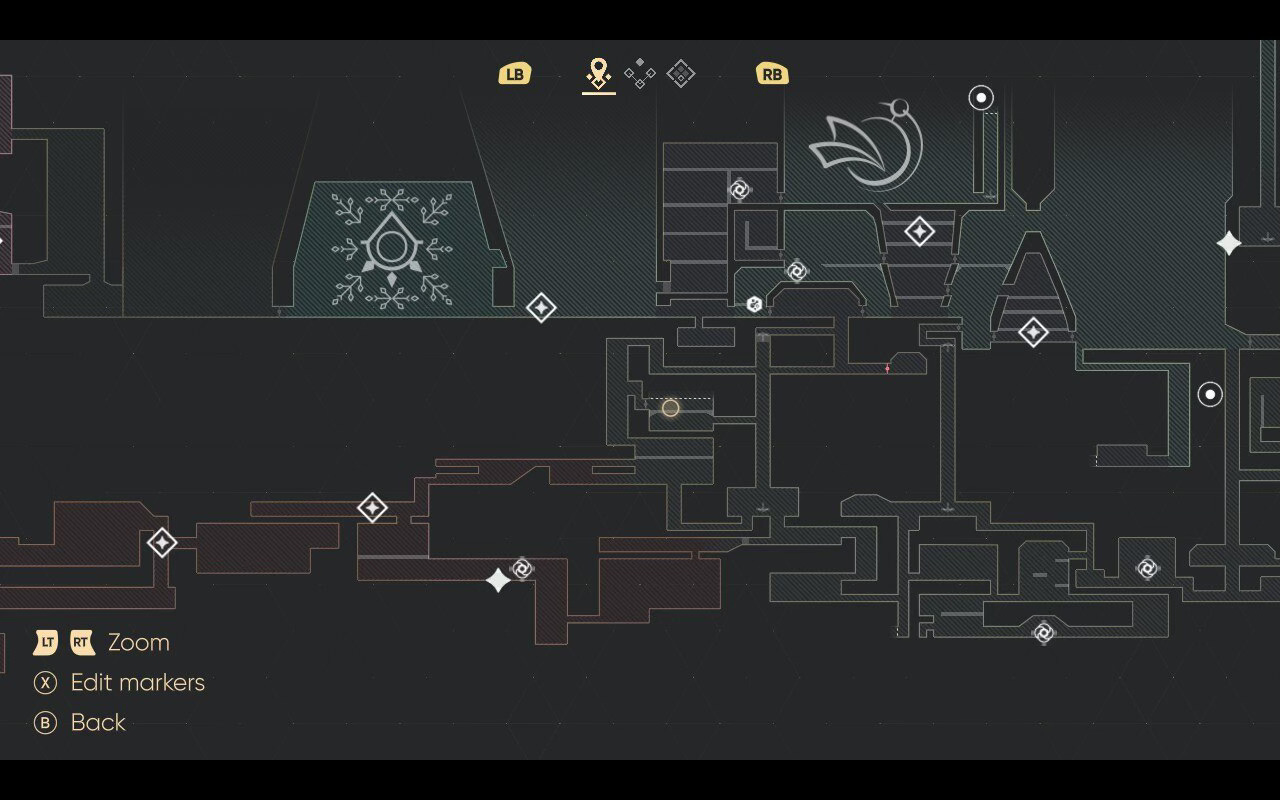
If video game loot boxes are meant to hook players by teasing them that maybe, just maybe the next one they crack open will grant a magnificent reward, MIO’s map offers a healthier version of that intoxicant. What is that little think on the edge of the screen, that gap in the map? I hope that it will…. yes… so many times lead to something great.
As I was playing MIO well past hours 12-14 and far from even the first ending, I texted a fellow reviewer:
“I found another elaborate secret area yesterday, after getting through a tough, optional platforming area”
But that wasn’t all. My text continued:
‘Then I found that that secret area led to another really cool, remote area (arguably the coolest in the game."
“And I found that THAT area led to yet another interesting, optional location that had a nice little text-log-based micro-story.”
Play this game if you enjoy the feeling of finding one $20 bill in your pocket after another.
Oh, and it’s gorgeous.
Bravo to the developers at Douze Dixièmes.
A few note about MIO’s difficulty:
The game can be very tough. Tough bosses. Tricky platforming. (The challenge sneaks up on you, because early sections are easy.)
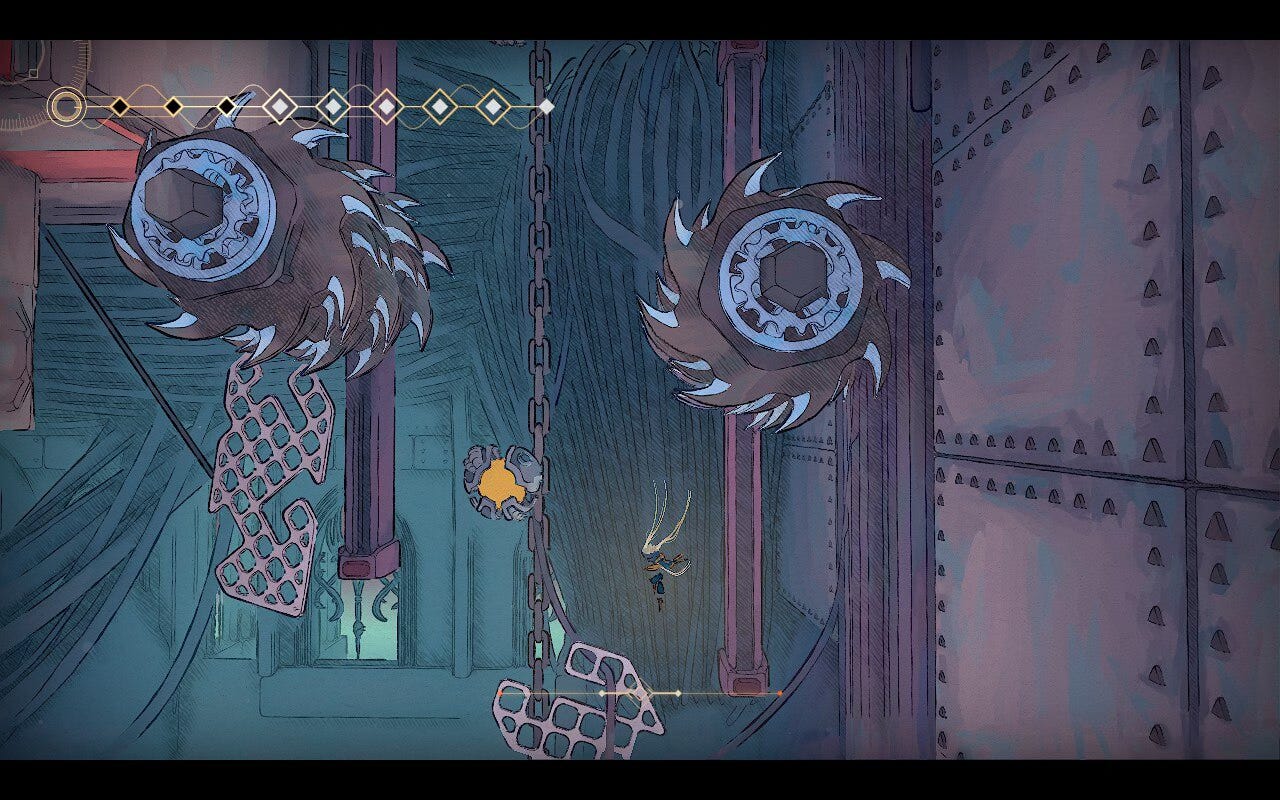
There’s an accessibility option that makes bosses easier each time they kill you (I used it for the final boss of my main run in the game). And there’s one that gives you another node of your health bar back if you fail during a platforming section. That one allows you to reset and retry infinitely from where you were last standing. I’m currently in an endgame crucible of spinning blades where that’s been super handy.
The game will sometimes permanently (?) remove one of the precious nodes of your health bar. This is maddening, especially if it happens while you’re trying to scrounge around for power-ups to face down a boss. But the game hides a mountain of perks and permanent power-ups that more than off-set this. You just need to be interested in spending time to find them.
Item 2: In brief
🇺🇸 Americans spent $60.1 billion on video game content, hardware and accessories in 2025, up 1% from $59.9 billion in 2024, according to research firm Circana.
Among publishers tracked, Electronic Arts had the best-selling game in the U.S. for the year with Battlefield 6, ranked by dollars. They also had the 6th (Madden), 7th (EA Sports College Football 26) and 8th (EA Sports FC 26). Call of Duty: Black Ops 7, from a series that usually tops the yearly charts, was 5th-best for the year, and Black Ops 6 was 10th, just ahead of Sony’s Ghost of Yotei. (Correction - 6:30pm ET: I previously wrote that it was Black Ops 7 that was 10th. Instead, it was the 2024 edition of CoD in that spot.)
One clue about the impact of Microsoft offering new Call of Duty games on Game Pass on Xbox and PC these days: On Xbox, Battlefield 6 was the platform’s second best-selling game in December (behind NBA 2K26), while Call of Duty was down at 4th. But, on PlayStation, where you must buy the game to play it, Black Ops 7 was December’s best-selling game, ranking well ahead of Battlefield 6 (4th).
For 2025, Switch 2 was the best-selling console, despite only releasing in June. Circana notes that “Nintendo Switch 2 remains the fastest selling video game hardware platform in tracked history.”
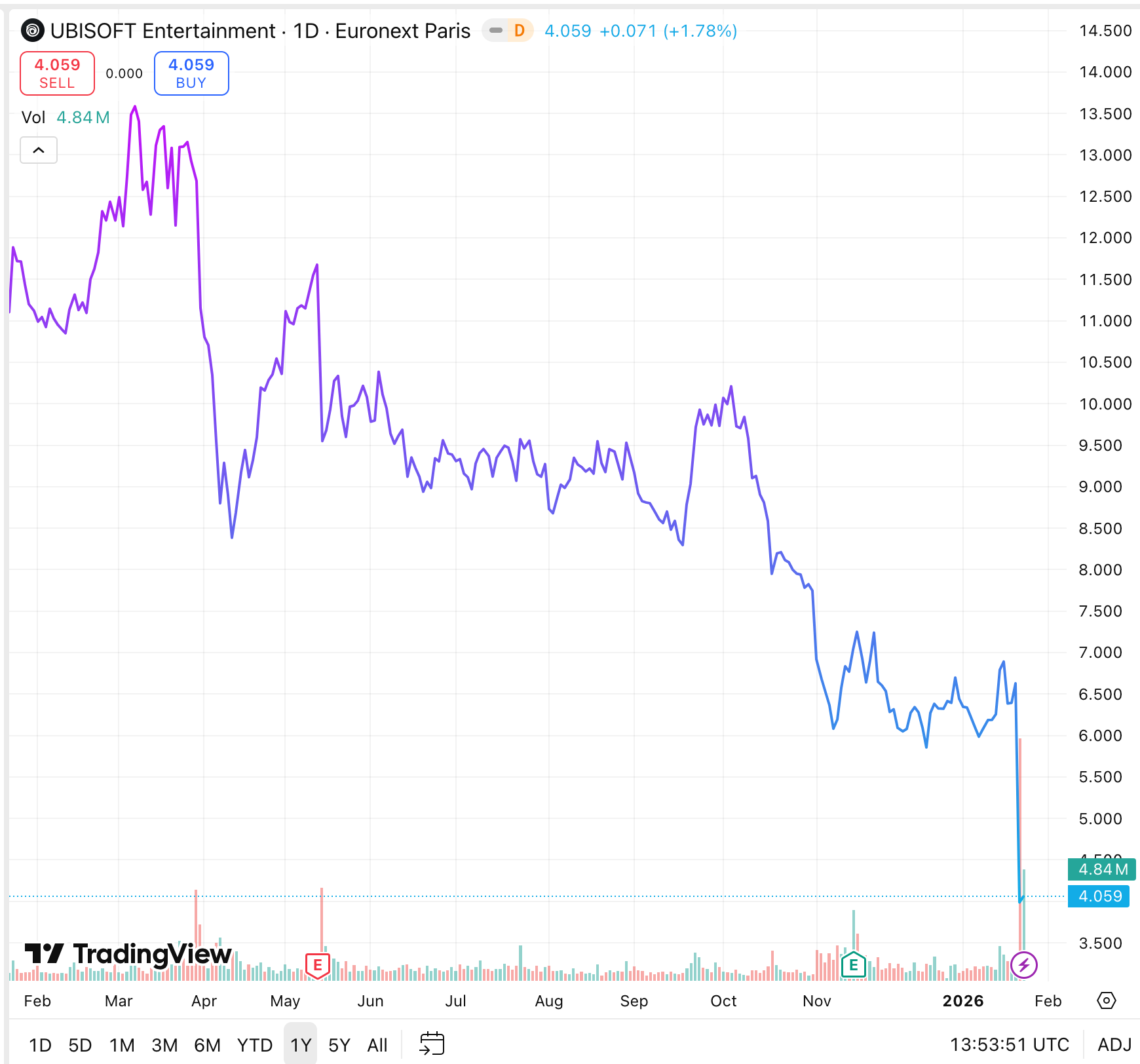
📉 Ubisoft’s share price fell by more than a third after it announced a major reorganization on Wednesday that included the cancellation of six games and the delay of seven others.
🎮 Microsoft’s latest Developer Direct showcase revealed that Forza Horizon 6, the open-world racing series’ drive through Japan, will be out on May 19 for Xbox and PC, and later in the year for PS5.
Forza offers the now-common perk that you can pay more to play the game “early”; in this case $120 (vs. the standard version’s $70) to play on Xbox/PC on May 15.)
Microsoft also showed off its revival of the Fable role-playing game series, setting it for a fall release. (Developer Playground is touting over 1,000 non-player characters will populate the world, going about their scheduled lives but all able to interact with the player.)
Microsoft-owned Double Fine showed off Kiln, a multiplayer brawling game involving player-sculpted pottery. Insider Gaming notes that Double Fine first publicized the project when it was part of a studio game jam in 2017, (a bit of a longer turnaround than another colorful, silly multiplayer game jam game recently covered by Game File).
👀 Nintendo’s aging developers: Hideki Konno, director of the original Mario Kart and a designer at Nintendo for 39 years, left the company in mid-2025, according to a recently spotted message he posted to Facebook.
VGC notes that this is the second time in a week that news has broken of a longtime Nintendo developer seemingly winding down their career at the company. Kensuke Tanabe, another 39-year veteran of Nintendo with a killer resume, told the Japanese magazine Nintendo Dream that December’s Metroid Prime 4 was his last game for Nintendo.
Flashback: In 2011, while interviewing him about Mario Kart Wii, I asked Konno about the series’ notorious blue shell item, which players can use to target whoever is leading a race. The item debuted in 1997’s Mario Kart 64. He told me:
“With Mario Kart 64, we wanted to have the same thing where everyone was in it until the end, but some of the processing problems occurred that didn’t allow us to do that. And what I mean by that is once you’re in a middle of a race you’ll get that natural separation. What we were trying to do was push them back together.”
🤔 California’s year-old law banning retailers from using words like “buy” or “purchase” in conjunction with the sale of digital games, books and other media (unless they make clear people are paying for a license, not a product) has spawned a new lawsuit against GameStop.
A class action claim filed earlier this month against the game retailer said it failed to disclose to a person who bought Elden Ring Nightreign digitally from GameStop that they were technically buying a license to access the game, Lexology explains.
The lawsuit does not claim that GameStop specifically used “buy now” language but alleges that the company created an overall impression that consumers were buying the game. Lexology states:
This theory is broader than prior cases, which targeted large platforms with express “Buy” or “Purchase” buttons at the point of sale. Here, the plaintiff argues that cumulative impressions across the purchase flow—not just the final button—violate AB 2426.
The plaintiff also points to Steam’s implementation as a benchmark, alleging that Steam discloses: “A purchase of a digital product grants a license for the product on Steam,” with a link to its terms and conditions.
🍕 YouTuber Retro Game Attic ordered a pizza from Dominos late last year via the Wii’s defunct Food Channel, which was resurrected by homebrew developers. This bizarre feat was recently spotted by Hackaday and PC Gamer.
Item 3: The week ahead
Monday, January 26
Highguard (PC, PlayStation, Xbox), the free-to-play multiplayer shooter that was the final game revealed at last month’s The Game Awards will be released. (The game, about which little is known, will have its first gameplay showcase that day as well.
Wednesday, January 28
Microsoft reports quarterly earnings (and is likely to give some sense of how Xbox and Call of Duty performed over the holidays).
Thursday, January 29
Mountain-climbing adventure Cairn (PC, PlayStation) and the what-it-sounds-like Space Warlord Baby Trading Simulator (PC) are released.
Friday, January 30
Code Vein II (PC, PlayStation, Xbox) is released.
The "finding $20 bills in pockets" analogy is perfect for what makes Metroidvania-style games addictive. MIO sounds like it nails the exploration loop—dense maps with meaningful secrets beat linear progression every time. Interesting that Battlefield 6 topped yearly charts while CoD slipped to 5th, probaly Game Pass cannibalizing Xbox sales. The 44-hour playtrhough for a 12-14 hour game is the best kind of problem.
Honestly, thank you for including a paragraph on difficulty for MIO! I'm really interested in it and I loved the Prince-of-Persia-Vania from Ubisoft (purchased it right after reading your review), but that was mostly due to its forgiving gameplay loop. As a father of 3 and with a full time job I just don't have time for "challenging" checkpoint placement anymore. 😅 So, I know you do, but please keep including info like that for the timewise challenged among us. 😅