

Sony will cease production of discs for new PlayStation games in 2028
The end of an era, a potential fatal blow to video games as physical media, and a hint of what’s in store for the PS6? Also: PS3/Vita online stores scheduled for shutdown.

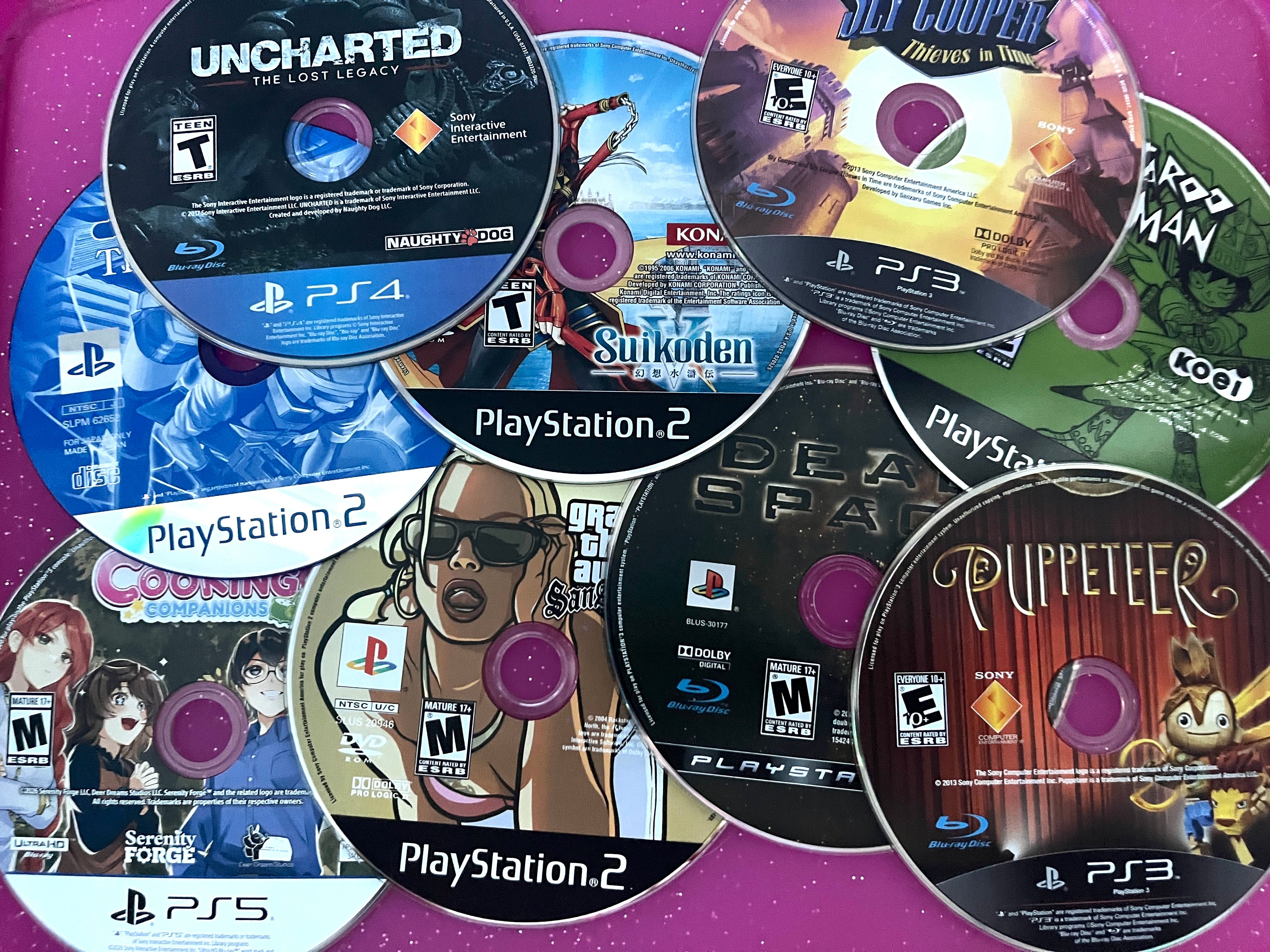
New games sold for PlayStation consoles will only be available digitally and won’t be sold on discs effective January 2028, Sony has announced.
The move applies to all PlayStation games released from that point on, including those made by Sony and those released by third parties.
The PlayStation group calls the change “a natural direction for Sony Interactive Entertainment to adapt to consumer trends as the general preference for digital media significantly outpaces physical discs,” according to a PlayStation blog post reviewed by Game File in advance of its publication.
As movies, TV and music have shifted from physical media to an age of downloads and streaming, Sony’s move could speed the demise of physical media in a gaming. The industry has offered consumers games via cartridges, cassettes, floppy discs, CDs, DVDs and Blu-Rays across a 50-year stretch.
Sony has been reporting to investors in recent years that PlayStation games have been increasingly purchased as downloads, not as discs. The most recent figures show nearly four in five purchases of full games for PlayStation 4 and PlayStation 5 were purchased digitally in the past year.
Stats like that may cause today’s news to carry an air of the inevitable. But Sony’s declaration for 2028 is still likely to produce a shock, as the biggest gaming platform on the planet that uses game discs leaves them behind.
Discs going away, but the fate of game boxes is unknown
Sony is committing to still selling games in physical retailers even after they drop discs in 2028. Just how those games will be sold—in boxes with codes inside, as cards marked with digital redemption codes—is unclear.
Digital games will also continue to be sold in the online PlayStation Store.
New games released for PlayStation consoles prior to January 2028 will be unaffected by the policy change, Sony says. That means the PS5 games of 2027, be they a new Madden, a new God of War, a new Call of Duty, a new Sly Cooper (one can dream?), would still potentially be offered on disc.
PlayStation 6 implications
Sony’s timeline for a transition to a no-disc era will also spin up more speculation about the timing and configuration of Sony’s next-generation console, the probable PlayStation 6.
“This pretty much guarantees that PS6 won’t arrive until 2028 at the earliest,” Piers Harding-Rolls, senior games research analyst at Ampere Analysis tells Game File. Harding-Rolls also concludes from today’s news that “the base version of a PS6 will not include a physical media drive,” as Sony looks to keep costs down on the device.
Sony itself is saying nothing about the PS6 today: not its timing, nor how it might or might not support internal or external disc drives in order to run disc-based PS4 and PS5 games, should the console be backwards compatible.
The many signs this was coming
Industry support for games being released on physical media has been waning. As has consumer interest in them.
PC games effectively went all-digital years ago, thanks to the popularity of playing games through Steam and other digital storefronts.
The Covid-19 pandemic and the lockdowns that kept much of the global population home helped shift shopping patterns toward downloads. Sony’s own data shows PlayStation game downloads being an uncommon consumer choice a decade ago and now becoming the norm.
On consoles, physical media has been in such decline that Sony and Microsoft both launched their current gen Xbox Series and PS5 consoles in 2020 with cheaper versions that lacked disc drives.
In early 2024, Phil Spencer, then head of Xbox, told me that ““[w]e ship games physically and digitally, and we’re really just following what the customers are doing.” He added that the game industry had become an outlier in still supporting disc-based entertainment, even as movies and TV have bailed on discs in favor of downloads and steaming:
“Gaming consoles themselves have kind of become the last consumer electronic device that has a drive. And this is a real issue, just in terms of the number of manufacturers that are actually building drives and the cost associated with those. And when you think about cogs that we’re going to go put in a console—and as you have fewer suppliers and fewer buyers—the cost of the drive does have an impact.”
Last year, the Nintendo’s Switch 2, which uses cartridges rather than discs, introduced the concept of game-key cards, which are physical media that contain no game, just a prompt for a download.
Even disc-based games aren’t what they once were, now frequently containing just stubs of games rather than the whole thing. The website Does It Play has tested over 3000 games and found that, for example, that the disc version of this year’s hit 007: First Light, only contained the game’s first mission, with the rest needing to be downloaded.
Beyond all that, last week brought the news that Grand Theft Auto VI, likely the biggest game launch this decade, will debut for PS5 and Xbox Series without a disc-based version.
Discs helped define PlayStation
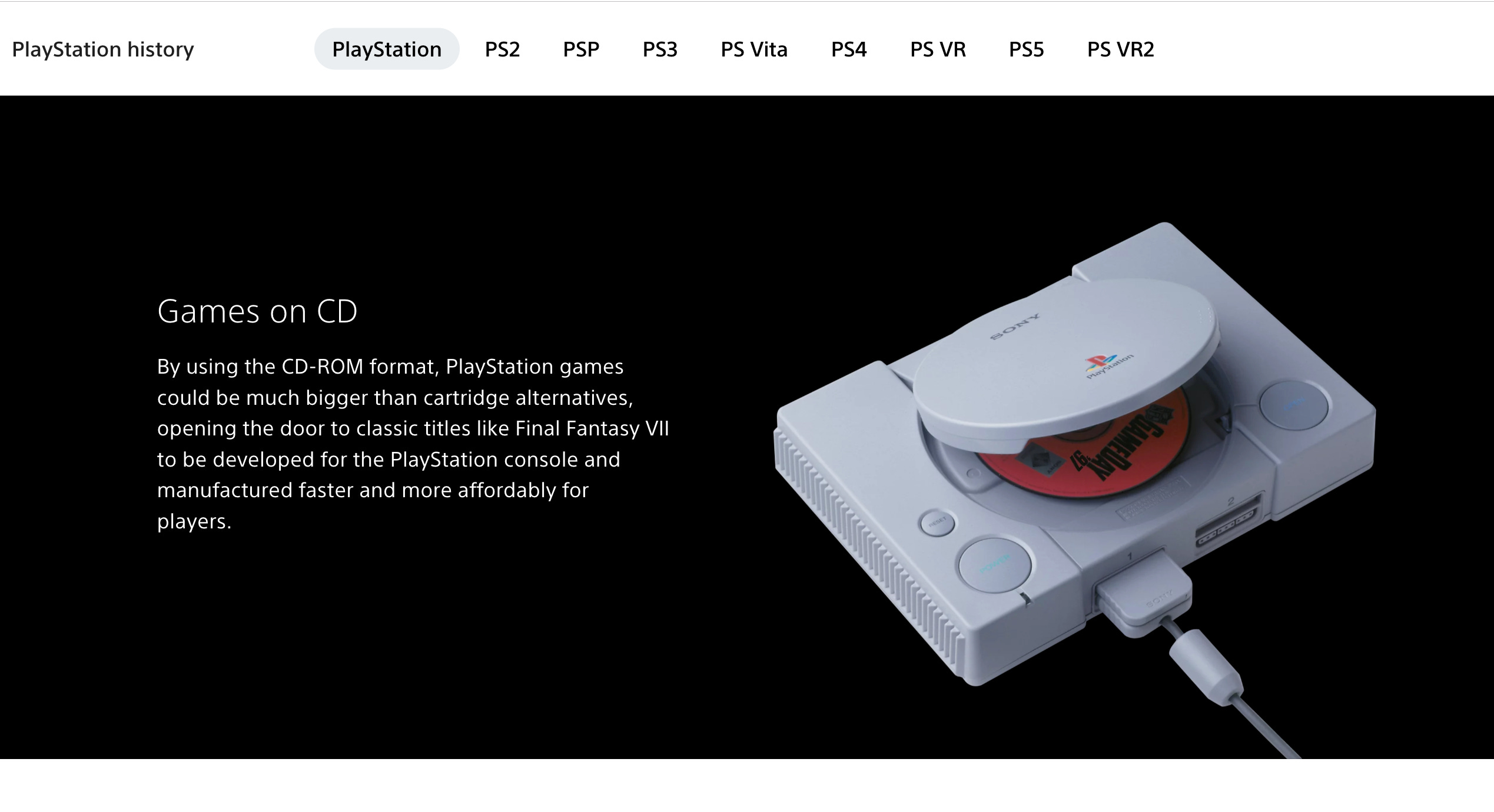
However the trends in entertainment may be going, it is still remarkable to see PlayStation ditch discs given their importance in PlayStation history:
In the late 1990s, the first PlayStation’s support for games on relatively cheap CD-ROMs instead of traditional game cartridges allowed the upstart console to outmaneuver cartridge-based systems from Nintendo and Sega, as it drove down game prices down in the process. (The cheaper disc format even prompted Final Fantasy VII maker Square to taunt Nintendo in a magazine ad, saying that if the game was “available on cartridge, it’d retail for around $1200.”)
PlayStation devices often doubled as machines for watching movies and TV on the latest disc-based formats. In the late 2000s, for example, Sony’s pricy PS3 gained traction as a go-to device for playing then-novel Blu-Ray discs.
In 2013, Sony effectively roasted the digital game-sharing restrictions proposed by rival Microsoft for its upcoming Xbox One console by showing how games could be shared for the then-upcoming PS4. In a 21-second clip that has over 20 million views on YouTube, one PlayStation executive simply handed a game box—presumably with disc inside—to another, who said “thanks.”

Sony’s possible motivations
The PlayStation announcement today cites “consumer preferences” and a shift away from discs among “the broader entertainment industry,” but does not delve into the decision-making process that brought Sony to this point.
Sony is not discussing the economics of this move (I asked!), but there are a number of potential factors:
Abandoning discs will spare Sony the cost of manufacturing and shipping them, which analysts and industry veterans I spoke to said could account for $1 or so of a game’s retail price. For first-party games, that’s direct savings for Sony, though the amount is limited by the winnowing percentage of people who were even buying the disc-based versions. For third-party games, Sony could pass the savings on to partners or just retain the better profit margin for themselves.
As the 2024 comments from Phil Spencer alluded to, leaving discs behind could mean leaving disc-drives behind, allowing Sony to produce consoles more cheaply.
Switching to digital-only for games could diminish the risks of copies of new games leaking. It would also seemingly make second-hand sales of used games impossible, pushing more people to buy their own copies of games.
These economic benefits for Sony could be boons for the games industry overall, Ampere analyst Piers Harding-Rolls tells Game File. Among other things, it could free publishers and retailers from having to worry about securing an inventory of game discs when trying to sell games, he noted.
“If there is a way to streamline the business of games retail, I generally think it’s a good thing for the industry as it removes unnecessary costs,” Harding-Rolls said. “This will help offset pressure on margins from other directions – development and staffing costs for example.”
Should the industry shift from game boxes that contain discs to smaller, cheaper game cards, Harding-Rolls said, that reduces pressure on publishers and retailers. “The advantage of everything going digital for the industry is that sales can be tracked much more easily and there is less commercial risk for publishers wanting to continue selling via retail,” he said.
The shift to no discs will also likely impact game development timelines, as developers will no longer face the same urgency to have a build ready to submit to PlayStation for the production of a disc, as industry experts noted around GTA VI’s no-disc news last week. Instead, projects may gain weeks of development time, in the event delivery deadlines for platform approval move closer to release date.
Preservationists’ likely worries
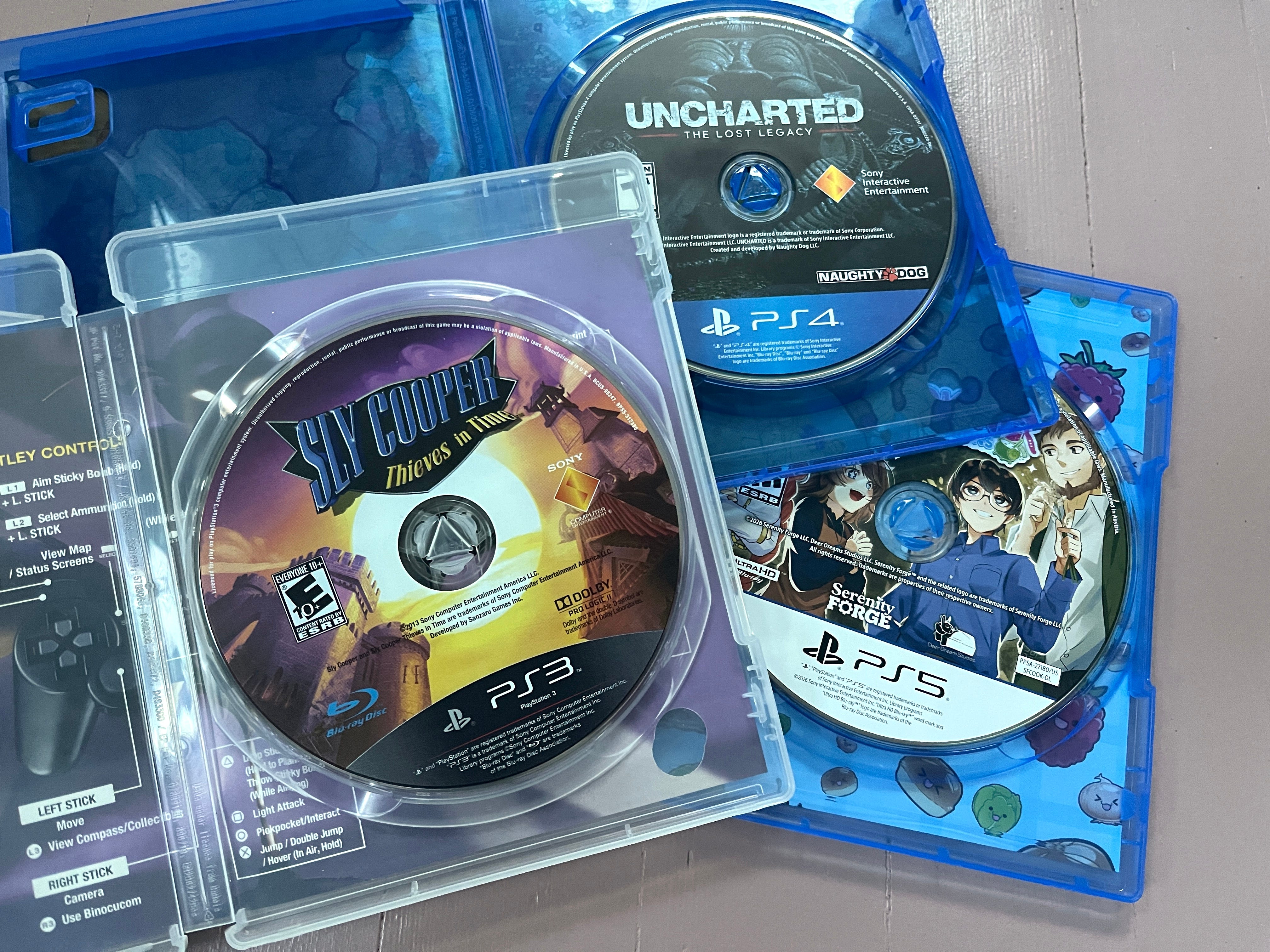
While millions of gamers have shifted to digital, there are still people who associate game discs—and only game discs—with actual ownership of PlayStation games.
That portion of the gaming community spoke up last week about wanting to buy a version of GTA VI that they could hold in their hands, could lend to a friend and could potentially pop into a well-preserved PS5 console three decades from now and still see it run. Such gamers didn’t want to worry that they’d merely purchased a digital copy that could lose access to the game if, say, the company behind the game someday turns of the servers that transmit downloadable copies.
Digital copies of games are inherently less long-lasting, because consumers aren’t actually buying a game (on a disc), just buying access to the game. The fine print in online gaming shops notes this, as does a recent law that went on the books in California in 2025. That lasw requires game publishers doing business in the state to refrain from words like “sell” when offering digital copies of games, unless they explicitly tell consumers that what’s being sold isn’t the game itself but a potentially revocable license to access it.
A Sony spokesperson noted to Game File that “[w]ith all digital content, including games, movies, and music, players are purchasing a personal license for non-commercial use.”
Regarding the fears of PlayStation games being lost to time in an all-digital era, the rep also noted that Sony remains “committed to delivering experiences from past generations to the new platforms our players are using.” They noted that PlayStation has used emulation and remasters to keep offering its classic games to modern gamers.
It’s true that many consumers have become accustomed to not having physical copies of new music albums or movies, but the relative precariousness of digital copies of games is in fact being highlighted today by….
Sony’s other big announcement: the upcoming closure of the PS3 and PS Vita online stores
Sony said today that it will be closing the online marketplaces for its PlayStation 3 console and PS Vita handheld in most countries in July 2027 (sooner elsewhere: August 2026 for the PS3 store Mexico, Honduras and Nicaragua; late 2026 for PS3 in other Latin American countries and the Middle East).
“We know this news may be disappointing to PS3 and PS Vita players who hold a special place in their hearts for this generation of gaming,” Sony said in its announcement, saying the move “was not an easy decision for us to make.”
Sony said that PS3 and Vita marketplaces “are no longer able” to support modern commerce systems, prompting a “need” to close the shops and focus on more modern PlayStation platform stores.
The news may spark some deja vu.
Sony announced back in March 2021 that it planned to take the PS3, Vita and PlayStation Portable marketplaces offline that summer. The move would have caused some 2,000 digital-only games to become unavailable for new purchasers, according to a VGC analysis at the time.
Fans complained loudly. By April 2021, Sony walked back the PS3 and Vita shop closures, with then PlayStation boss Jim Ryan saying “it’s clear that we made the wrong decision here.”
This time around, Sony is giving a longer notice period in most regions.
The closure of those stores is still likely to cut off access to new purchases of digital-only PS3 and Vita games.
The current PlayStation 5 marketplace sells PS5 and PS4 games, as well as a selection of PS1 and PS2 games. It does not sell PS3 games, because games for that platform can’t run on the system (some are offered via a PlayStation Plus streaming option). Vita games also aren’t sold via PS5.
Sony says digitally purchased PS3 and Vita games will be downloadable after the stores’ shutdowns “for the foreseeable future.”
Sony’s move contrasts with Microsoft’s Xbox platform, which continues to sell and support games from all four Xbox console generations.
But it puts it in line with Nintendo, which disabled purchases in the marketplace for its Wii console (a contemporary of the PS3) in 2019. Nintendo discontinued purchases in the online shop for its 3DS portable (a contemporary of the Vita) in 2023.
The big questions about Sony’s 2028 post-disc era
Will Microsoft follow suit, ending support for new disc-based games on Xbox platforms and therefore all game consoles, too?
Whether Microsoft does or not, will third-parties that can no longer release games on discs for PlayStation, simply ditch the disc options across the board?
Given the GTA VI no-disc experiment launching this November, will more game publishers decide to forgo disc-based offerings even in 2027?
How will no-disc PS5/6 games be packaged and sold in brick-and-mortar retail stores?
What becomes of game sharing in an all-digital era? Will Sony modify its current set-up, which currently allows some sharing of digital games across a pair of consoles, to allow more casual lending? (See for example, Nintendo’s year-old system of letting players lend a digital game to another player in a “family group” for up to 14 days.)
Will there be a version of a PS6 with a disc drive? Or will a drive be offered as an add-on? And how will gamers who want to retain access to PS4/PS5 disc-based games react to whichever configurations Sony chooses to offer?
What will the final disc-based PlayStation game be?
Very sad, though understandable purely from a business perspective I suppose.
I'm still holding out hope for a return to the demo-disc era!
What a scoop!
But one bit did stand out: I could absolutely go for another Sly Cooper game! What an awesome series.