

47 revelatory hours with Assassin’s Creed Black Flag Resynced
A review in the new Assassin’s Creed's fringes, where some truths about the game can be found.

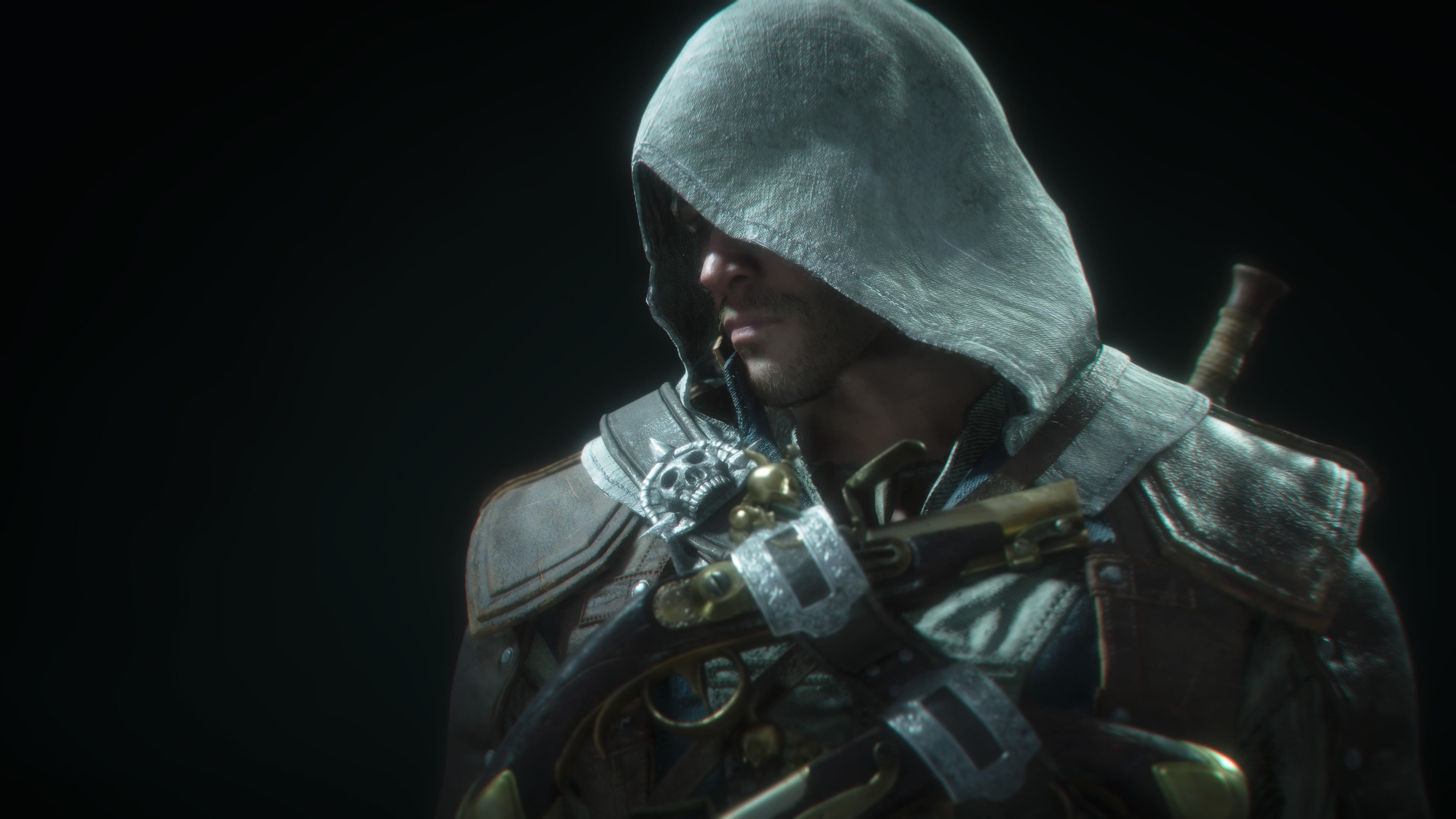
To review this month’s supposed remake of 2013’s Assassin’s Creed IV: Black Flag, I must first correct the record.
Assassin’s Creed Black Flag Resynced isn’t a game about pirates (and assassins) in the 18th century Caribbean.
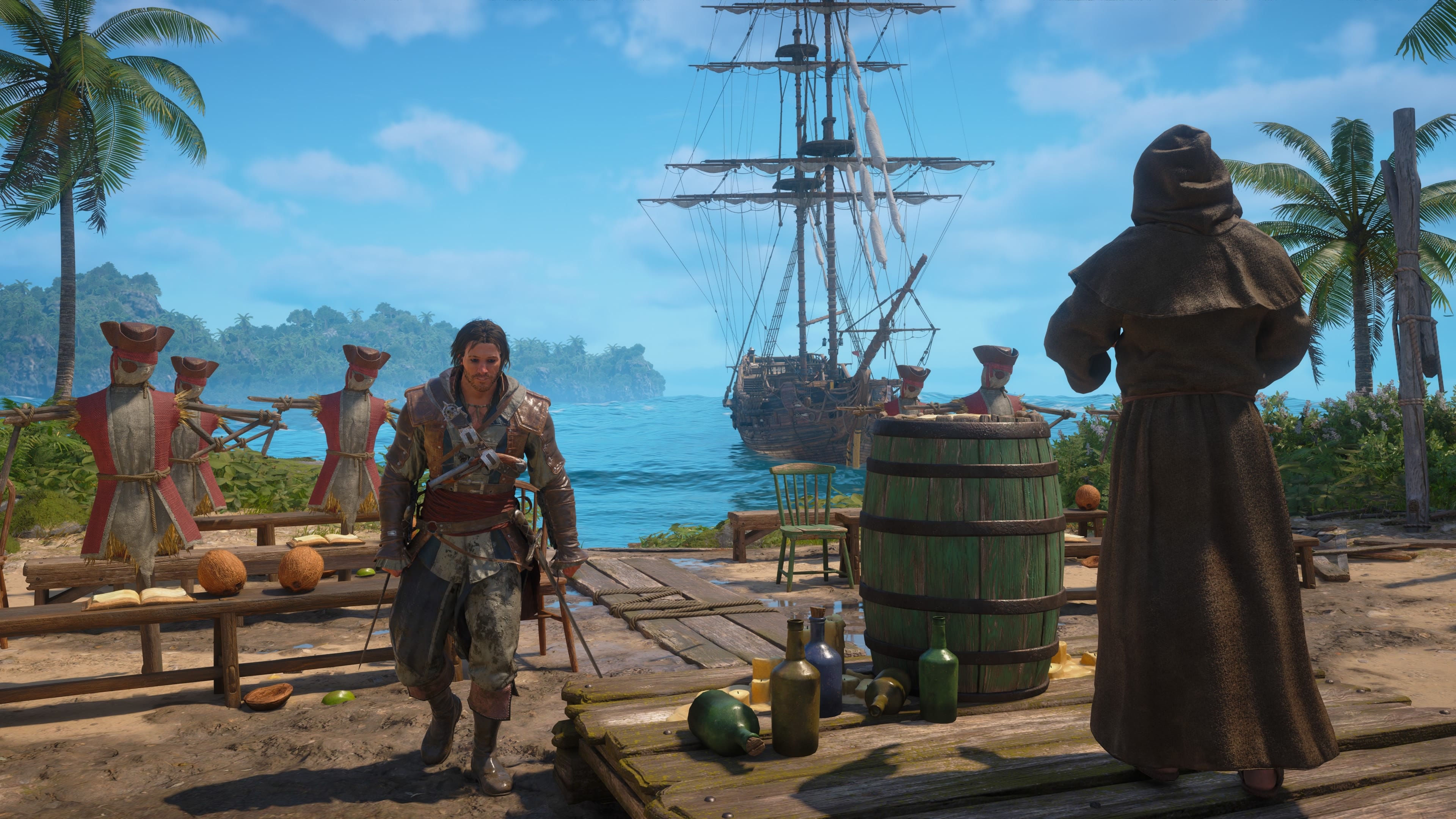
Sure, sure, that’s what the trailers would have you believe. They’ve go their clips of Edward Kenway swinging his swords and steering his pirate ship into cannon-blasting combat against British frigates.
Is Resynced truly a pirate game?
Of the 47 hours I spent playing Resynced over the past few weeks, I will admit I spent maybe 44 (?) of them collecting plunder with Blackbeard, drinking rum with Anne Bonny and debating the pros and cons of the lawless pirate-run settlement Nassau with Benjamin Hornigold. I may in fact have spent dozens of hours sailing to remote islands, reading treasure maps, opening messages left in bottles, sinking the odd Man o’ War with a well-timed broadside, collecting sea shanties for my crew, befriending a pet monkey, and hunting whales.
I am nevertheless neither so Gullible nor so Narrow-Minded as to call the magnificent Resynced a “pirate remake.”
Oh no.
Forget any reviews of Assassin’s Creed Black Flag Resynced you may have read.
Forget what you yourself may have played, if you’ve spent any time with the game since its launch.
What Assassin’s Creed Black Flag Resynced is really about
I’m here to give you the scoop (spoilers for Resynced’s Animus menu lore, which many players are probably not going to see):
Assassin’s Creed Black Flag Resynced, the new game whose development was led by Ubisoft Singapore, is set in the year 2096.
It’s about a societal split, about revolution, about an old Assassin’s Creed adventure repurposed in the series’ distant future as propaganda or samizdat.
It’s about the overheated future of 2096, essentially conquered by the series’ well-established nefarious Templar-run company Abstergo.
(In this future, Abstergo is, among other things, remaking a 2013 pirate movie called Devils of the Caribbean, but this time in VR. The VR version will be backed by a marketing plan that involves AI influencers, a 10,000-avatar “metaverse premiere event” and that manufacturing of memes aimed at “50 million VR nodes.” See what I mean about Abstergo being evil?)
Resynced is about a late 21st-century population mollified by the widespread use of Abstergo’s Animus devices which let people experience the lives of historical figures culled from “genetic memories.”
It’s about an insurgent faction of Assassins. And it’s about a plan to wake the population into revolutionary fervor by showing them the memories of 18th century pirate Edward Kenway, who—as depicted in the original Black Flag and again in Resynced—gradually comes to an understanding about the Assassins of his day and their centuries old fight for freedom.
Resynced is also about an AI developed within the late 21st-century Animus, called Ego. It has found a way to alter genetic memories, to create and show Animus users false ones. The game is about Ego’s efforts to tell the people experiencing Edward Kenway’s memories that Kenway was wrong, that fighting against order is folly, that we should crave a world where “compliance is rewarded with power.”
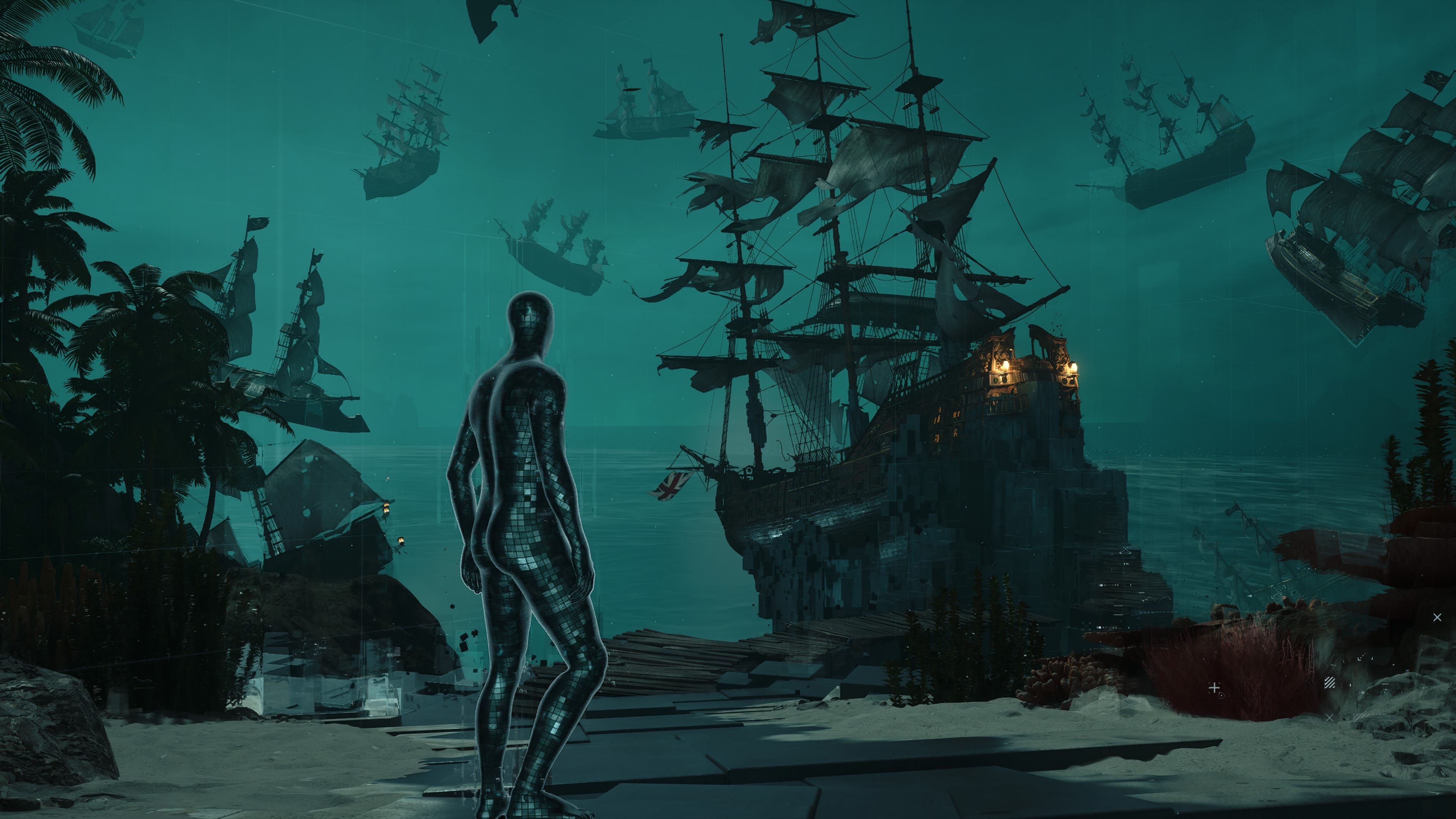
Who are we in this game? We’re an unnamed Animus user in 2096 who experiences Kenway’s journey virtually. At four moments during Kenway’s exploits in the Caribbean our virtual jaunt can be interrupted for 10-15 minutes, as we explore Animus “rifts” where Ego explicitly tries to tell us how wrong Kenway was.
None of this is what 2013’s Assassin’s Creed IV: Black Flag was about, of course.
That was a different game, even if you also spent dozens of hours pirating as Kenway in that game, across missions and a map that’s been faithfully reintroduced and rebuilt for Resynced.
The 2013 Black Flag was about you playing as an unnamed researcher newly hired in 2013 by Abstergo Entertainment, the video game development wing of the Templars’ evil-corp. In that game, you were assigned to use the Animus to dive into the genetic memories of Desmond Miles, a man who died in Assassin’s Creed III and who was descended from a long line of Assassins (and at least one Templar) whose adventures were featured across the prior AC games.
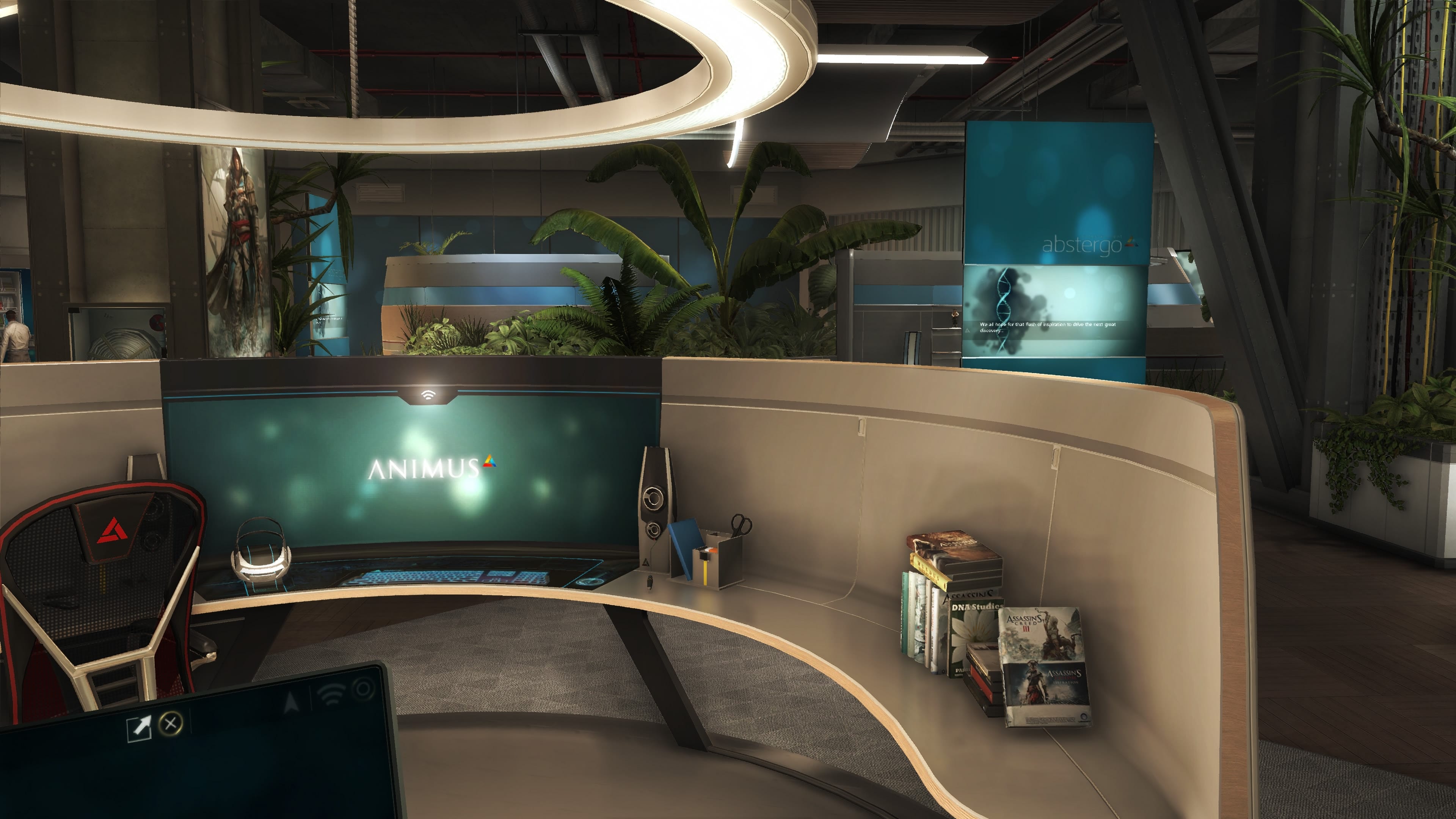
In 2013’s Black Flag, your mission was to plumb the Edward Kenway experience for material that Abstergo could use in productions such as the motion picture Devils of the Caribbean, though the Templars had some ulterior motives for the assignment.
Resynced is therefore not a remake of 2013’s Black Flag. It’s a sequel.
It is a new game about a new exploration of Edward Kenway’s pirate/assassin journey, set 83 years after the framing sequences of the original game. Resynced provides a new narrative framework that, thanks to the concept of an AI that wants to alter historical memories, arrives with creative justification to tweak a now-classic 13-year old game.
That makes Resynced, already a hot seller, a tantalizing hint of where Ubisoft could go with a line of Assassin’s Creed remakes. They could remake the first game, the Ezio games, even the recent ones set in ancient Egypt and Greece. And for each, they could not just modernize the graphics and controls but expand and alter their sequences of events to use them as reference points for a conflict set in the late 21st century, as rival factions try to weaponize historical memories.
A story most players will probably miss
If you didn’t know any of this, I’m not surprised.
If you played the game and still didn’t catch it, I’m not a bit shocked.
If Ubisoft has no plans to do more of this, I won’t fall down.
Almost all of what I’ve described is optional and missable in Black Flag Resynced.
I nearly missed it myself, as I planned for a breezy playthrough of an old Assassin’s Creed favorite. Instead, I found myself in a 40+ hour hunt for the “real” story, buried deeper in Resynced than any gold-filled chest.
The story of 2096 is Resynced’s meta-story, told in two remote pockets of the game: 1) four optional playable “rifts” that players may find as they proceed through Resynced’s pirate fantasy , 2) in dozens of text files tucked three menus deep in the game’s barely-interactive Animus hub.
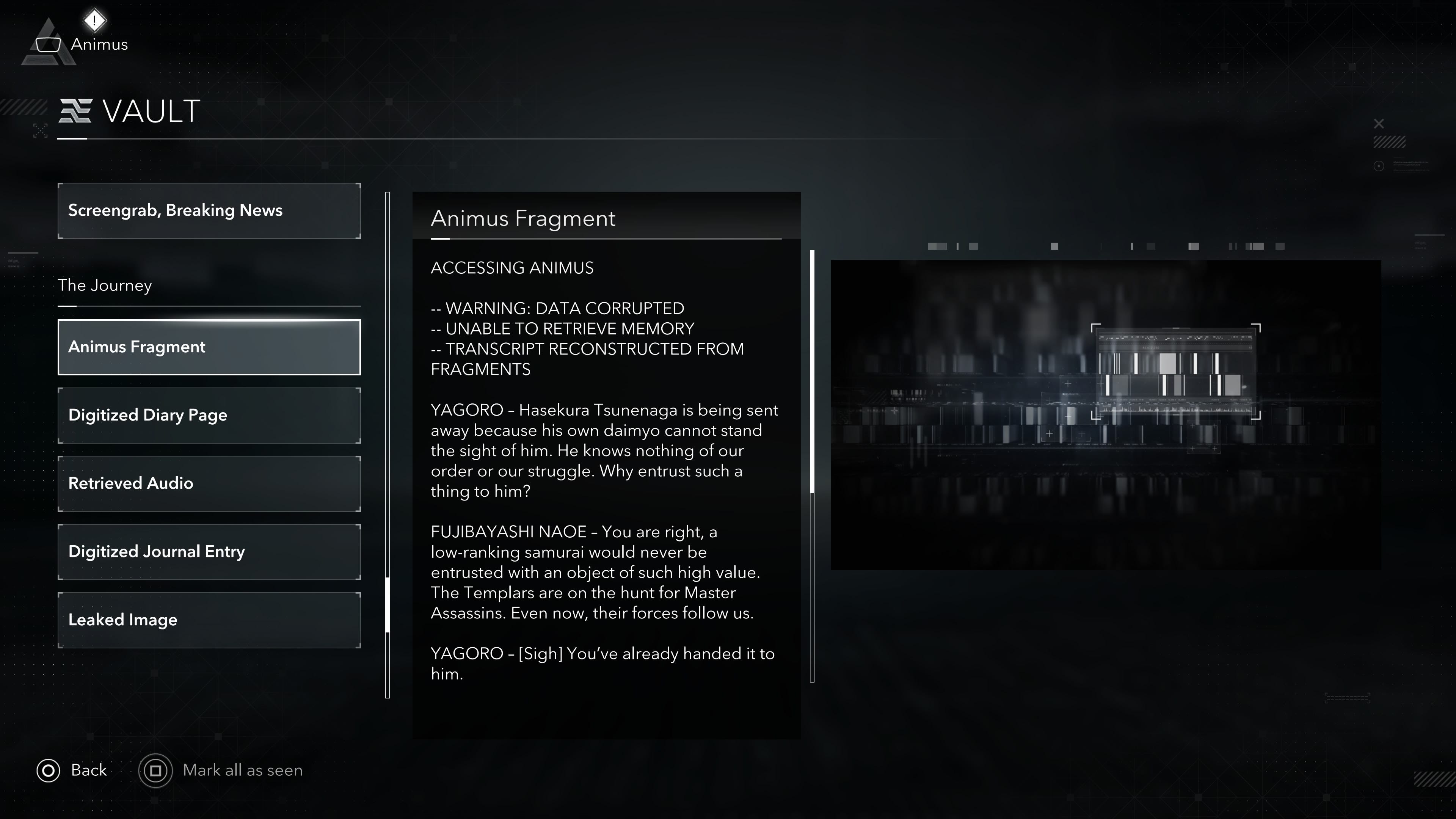
Assassin’s Creed games have almost always had a meta-story about people in the 21st century (usually matching the game’s release year) and their connections to the main history portions you play. Those meta-stories have always been squeezed into the margins, though seldom as severely and as, uh, graphiaclly simple, as in recent games.
Back in 2013, the modern-day exploits of you as an Abstergo Entertainment employee were prominent. They were portrayed via first-person portions that occasionally interrupted the third-person Kenway experience and could be explored for hours, complete with their own missions, side quests and puzzles.
Resynced’s 2096 story—of Assassin “Watchers” vs. Abstergo/Tempar goons, of rogue AIs, of panicking scientists, of a woman wondering why her Animus-addicted husband is muttering about Mary Read (“What does he mean by Assassins?”), of a fight for the population’s hearts and minds via varying interpretations of Edward Kenway’s life choices—is mostly told through unlockable text files.
The files are interesting. Offered via diary entries, intercepted chats and news reports, they present varied perspectives of a world in crisis. One set works as a narrative puzzle as it reveals the Rashomonic interpretations of a massacre, or was that a successful Assassin hit? Another favorite reveals the rising bitterness of a person who, through Edward Kenway’s journey, now shakes at the ignored evil around him.
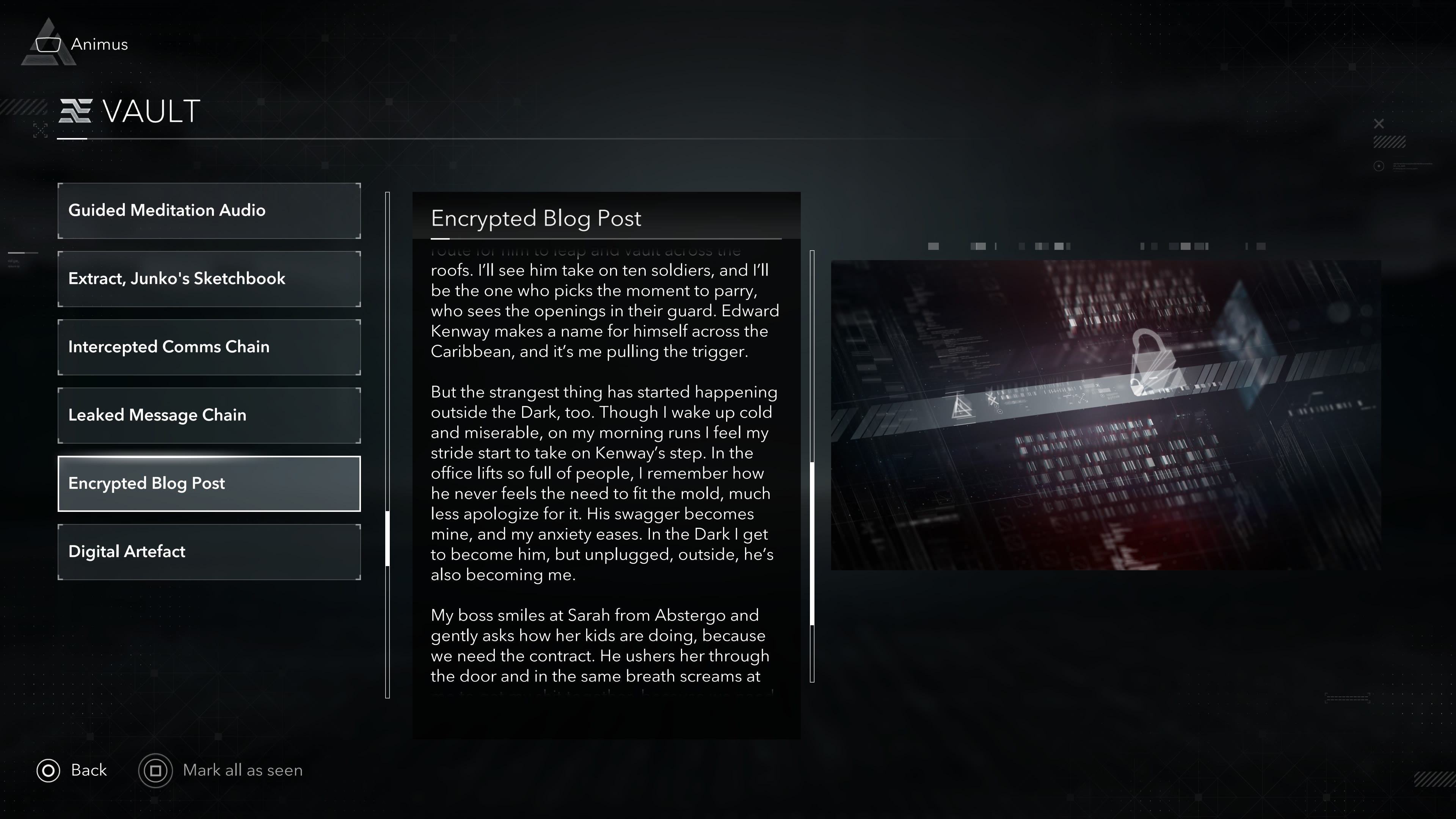
One surmises that Ubisoft is averse to putting the Assassin’s Creed’s meta-story in the way of more marketable pirate playgrounds and ninja/samurai epics. Instead, we get a better-than-nothing text-in-menus approach introduced in 2025’s Assassin’s Creed Shadows. In Shadows, players unlocked the meta-story text files largely via time-gated missions that called on the user to kill X number of enemy type Y, clear three enemy castles, re-win a three-phase fighting tournament, and other grinds. Time restrictions on accessing these missions and unlocking the files meant it could take players months to access the full story in-game. But even in the most hardcore Assassin’s Creed hangouts, the fanbase instead seemed to throw up their hands rather than grind to keep up.
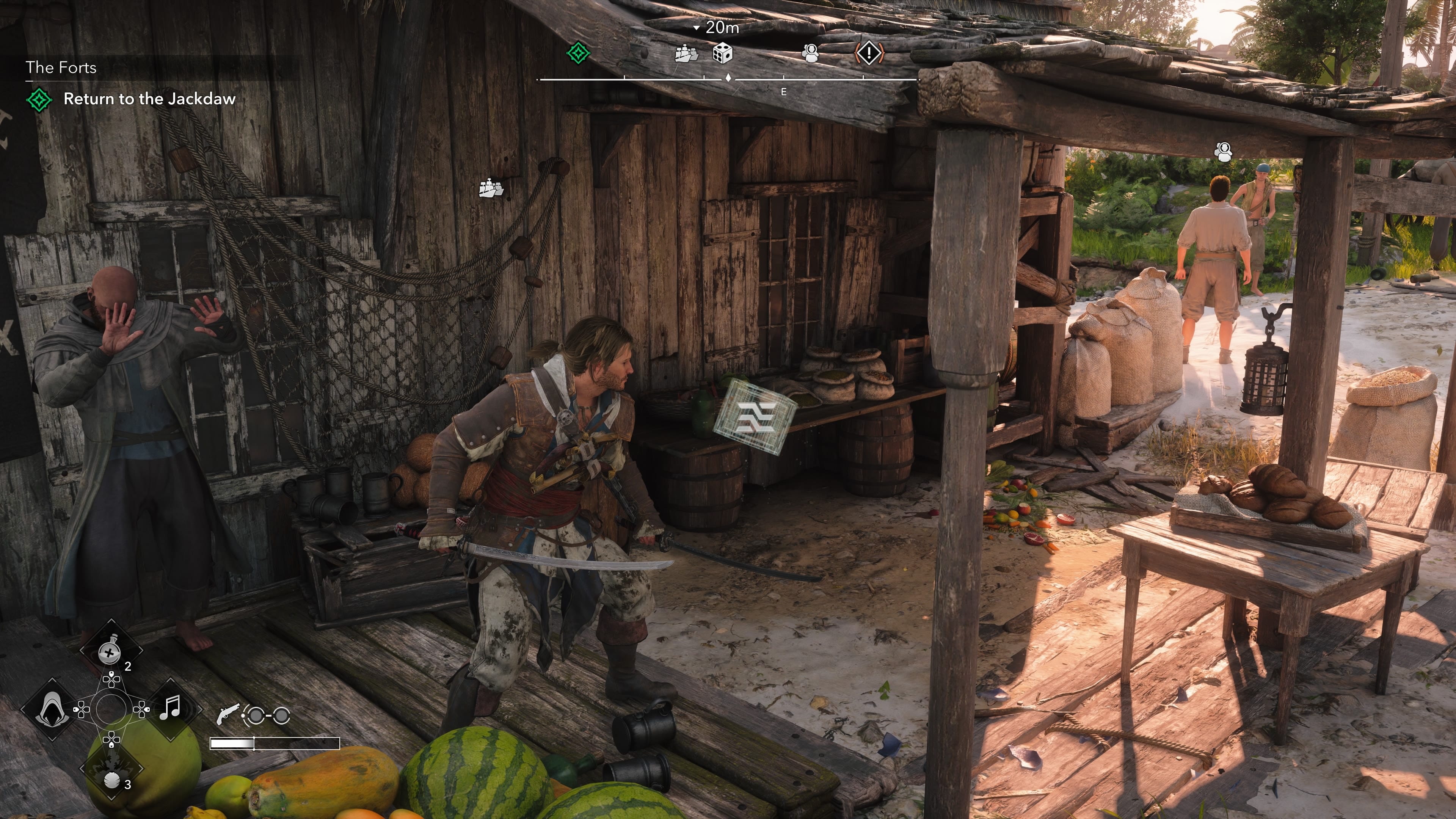
In Resynced, Ubisoft has shown some mercy, diminishing the amount of new text files that are tied to timed grinds. Now, most of the text-based 2096 lore are associated with “data file” collectibles that players can find in the world. That includes a batch of written entries that explain a historical link between the feudal Japan era in Shadows and the piracy adventures in Black Flag.
Players who explore a lot will find dozens of data files, though the game does not appear to offer any in-game tracker for finding each one. You just need to keep looking for them. As of this writing, I have most of them, but not all. I can’t find any full guide for them online. And even Ubisoft’s optional $5 microtransaction that reveals lots of items in-game does not appear to reveal the locations of the text files (at least the official description omits them from its collectibles list). That’s not a huge bother, because tracking the data files down compelled me to re-explore the waves and islands of Black Flag. That was a thoroughly pleasant task to do for the first time in a dozen years. I expect many players, though, will be content to wait for the files to be reproduced in an online AC wiki somewhere, the easier to read on a web page.
It may not seem enticing to play a video game in order to gradually unlock pages of text to read. Why not, you may ask, just read a book, where they put the pages in order? For one, they’ve not tucked this latest installment of Assassin’s Creed’s meta saga in a book. I also enjoy the unordered delivery, the dawning comprehension of a story about 2096’s desperate people and questionable tech, which I glimpsed first at its middle, then the end, then the front, then other moments in between1. I am also enamored with the idea of the Assassin’s Creed games I’ve previously played, including Black Flag, being repurposed for an information war.
The ideas in Resynced’s meta-story, which builds off characters and ideas in Shadows’ chunks of text, are strong. The potential of where they could go with it is exciting.
As for the pirate stuff?
Looks great, controls pretty well, is fun to play and oh so speedy in terms of how much of a good time you can have with each sit-down. It never gets old to chase a new shanty page across a rooftop, bombard a fort with upgraded mortars or use a diving bell to explore sunken wrecks (hats off to the team at Ubisoft Barcelona that worked on the underwater portions in Resynced; that team is now facing layoffs, such is the misery of modern gaming and oft-troubled Ubisoft).
New pirate missions in Resynced involving new ally characters are brief, dramatic and add more to Edward’s story, even if the gameplay perks they provide barely enhance the gameplay. A new denouement for high-class pirate Stede Bonnet is affecting; a new hunt for Blackbeard’s treasure is a welcome extra moment. A new epilogue to hunt down a pirate killer, on the other hand, over-complicates Kenway’s character. The ending credits remain my favorite of any game I’ve ever played.
Black Flag provides great source material. The revisit is well-made and a great sign of what could be. It is offered in a different wrapper that hints at an opportunity for more interesting remakes to come, should Ubisoft choose to pursue such treasures—and as we brace to resist or comply with an Abstergo future.
The messages that Edward Kenway finds in bottles tell another out-of-order story, one about a man reckoning with the strange memories and voices he’s heard in his head since he was a boy. That tale was also in the 2013 game and develops into one of Black Flag’s most compelling character arcs. In Resynced, it has lost its climax, because the bottle story previously paid off in the halls of the first-person Abstergo Entertainment, which is exclusive to the older game. An altered resolution, written by the 2013 game’s lead writer is fine, doesn’t invalidate the 2013 version, but makes for an inferior final note.