

Nintendo's acquisition streak
Plus: A look back at Metroid Prime 1

Nintendo, a company historically averse to buying other companies, is buying its fifth one in five years.
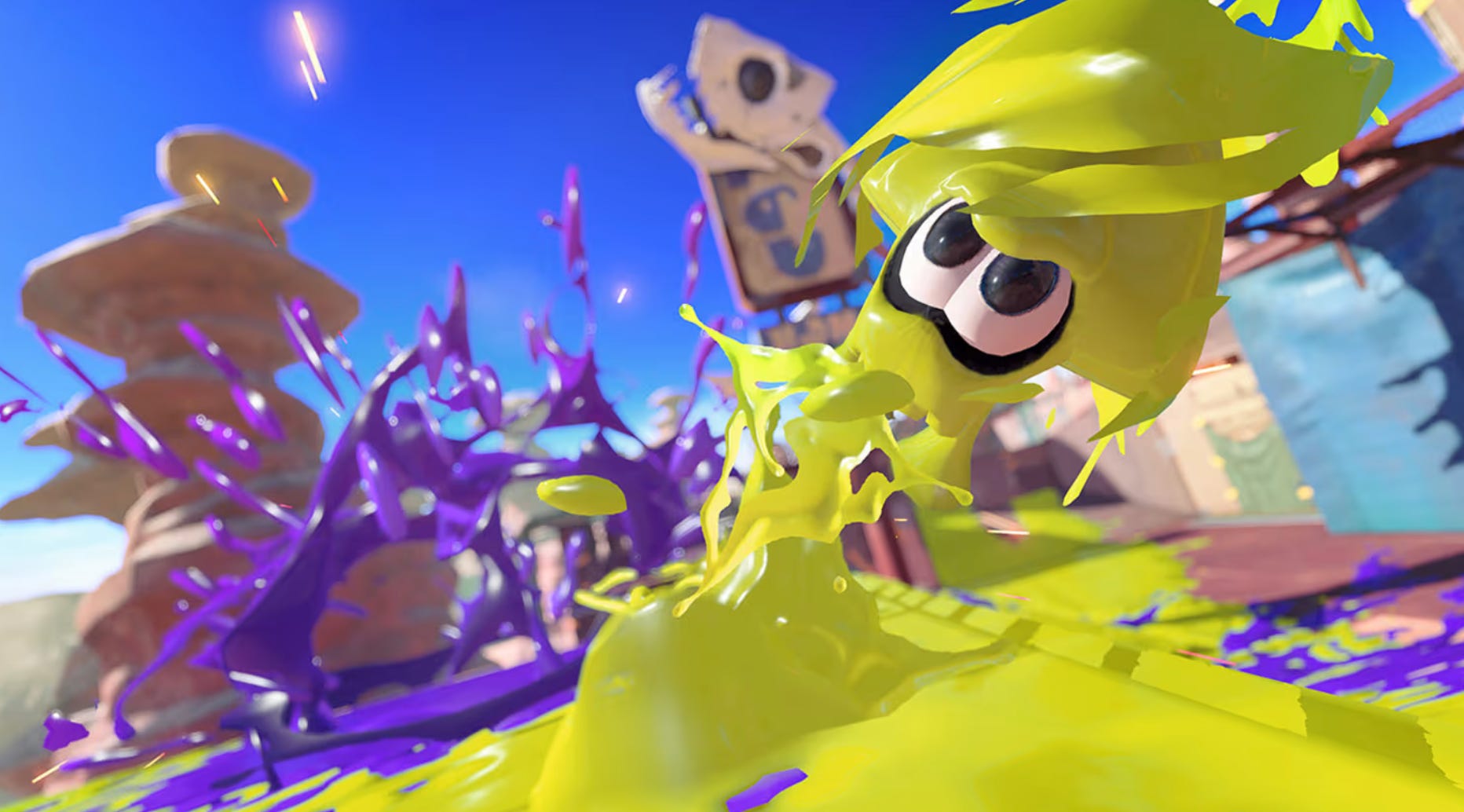
The gaming giant announced late last week that it plans to purchase Bandai Namco Singapore Studios by April 2026 and rename it Nintendo Studios Singapore.
“Nintendo has made the decision to acquire shares in BNSS to strengthen the development structure of the Nintendo Group,” the company said in a statement.
Bandai Namco confirmed the transaction in a post on the Singapore Studios’ website but offered no explanation for it (even the URL for the statement is amusingly opaque: https://bandainamcostudios.sg/news/this-is-an-update/)
The Singapore studio was founded in 2013 and previously supported development of the Nintendo Switch game Splatoon 3. The group worked on multiple Bandai Namco games, including Tekken 8, Soulcalibur VI, and Ace Combat 7.
The studio’s most recent game, a PC/PS5 platformer called Hirogami, was a side project made by about seven developers in the studio’s Singapore and affiliated Malaysia office. It was not published by parent company Bandai Namco but by Kakehashi Games.
On LinkedIn, the Singapore studio lists around 60 employees.
Nintendo’s acquisition isn’t nearly as massive nor as splashy as Microsoft’s recent $69 billion splurge on Activision Blizzard, nor Sony’s $3.6 billion 2022 grab of Bungie.
It’s an extraordinary purchase for different reasons.
Five in a row
Back in January 2021, Nintendo bought Vancouver-based development studio Next Level Games. Press and analysts noted it was the Mario-maker’s first studio acquisition since 2007.
Since then, what was an aberration has become a streak.
In early 2022, Nintendo acquired Kyoto-based development studio SRD, already a development partner with Nintendo for four decades. Nintendo said they bought SRD to “secure the availability of software development resources for Nintendo, in addition to facilitating an anticipated improvement in software development efficiency.”
In mid-2022 (the next fiscal year), Nintendo acquired Tokyo-based Dynamo Pictures and rebranded it Nintendo Pictures Ltd to “focus on development of visual content utilizing Nintendo IP.” (The first public results of Dynamo’s work for Nintendo: A Pikmin-themed short that Nintendo teased and then officially revealed two months ago).
In May 2024, Nintendo said it would acquire Florida-based Shiver Entertainment from the studio-shedding Embracer Group “to secure high-level resources for porting and developing software titles.” (While Shiver’s portfolio is not widely known, its CEO, John Schappert, has an impressive resume: co-founded Madden studio Tiburon, was on Xbox’s leadership team in the Xbox 360 era and was the chief operating officer at EA and, later, Zynga.)
And now the Singapore Studios deal.
That’s five acquisitions by Nintendo in five years, all since Nintendo’s current CEO, Shuntaro Furukawa, was promoted to his current role in 2018.
Purchasing their partners
At least three of the purchased companies had deep ties to Nintendo.
Next Level had been working with Nintendo on Luigi’s Mansion games and Nintendo sports titles for more than 15 years before Nintendo bought them.
SRD’s work with Nintendo dated back to Donkey Kong and Super Mario Bros. And the studio’s Kyoto office was noted at least in 2010 to be inside Nintendo’s headquarters.
The Bandai Namco Singapore Studio’s Splatoon 3 work wasn’t its only tie to Nintendo. Its parent company, Bandai Namco, is extremely close to its fellow Japanese game giant. Bandai Namco co-develops major Nintendo exclusives, including last month’s marquee Switch 2 release Kirby Air Riders. As of the end of September, Nintendo was the ninth-biggest shareholder in Bandai Namco, holding some $300 million worth of shares “for the purpose of maintaining and developing a stable business relationship with this company.” (Nintendo holds smaller stakes in Konami, Square Enix and Koei Tecmo; its stake in Bandai Namco is Nintendo’s biggest investment in an outside firm.)
Plus, who did Nintendo buy a studio from back in 2007? That’d be what was then called Namco Bandai, from whom Nintendo bought role-playing game maker Monolith Soft.
The need to get bigger
Nintendo has enough cash on hand to buy just about any company they’d want, MST Financial analyst David Gibson told Game File, but he believes they’ll remain choosy and “will only buy partners they know well that expand their capability and are incremental.”
The acquisitions, Gibson said, are “part of the wider plan to expand their production capability as they transition from Switch/3DS to Switch 2 and beyond. They need more people to produce HD output at the same pace of 10-12 games per annum with 1-2 large tentpole ones.”
He noted that Nintendo has accelerated its headcount growth since the launch of the Switch and that headcount has risen as software sales have grown.
Last month, Nintendo CEO Furukawa told Nintendo investors that one of the company’s key priorities is to strengthen internal game development. “This includes initiatives such as acquiring development companies to make them subsidiaries and augmenting our development facilities,” he said. Nintendo is also constructing an additional building for internal game development.
Nintendo streaks exist for the company itself to break them. For years, it aired Nintendo Direct showcases like clockwork… then it didn’t. For years, it released iterative handheld hardware models annually… until it didn’t. Nintendo’s current pattern suggests it’ll buy another company in 2026: likely one that isn’t that huge, that it’s worked with for a while. But with Nintendo, the only safe bet is to simply wait and see.
Item 2: In brief…
👀 TikTok owner ByteDance is in talks to sell its Moonton Games division to Saudi-backed Savvy Games, Bloomberg reports, citing people familiar with the matter.
ByteDance had previously been shopping Moonton, as part of a step back from game development and publishing.
🚫 Veteran UK studio Splash Damage (Brink, Enemy Territory: Quake Wars), which was bought from Tencent in September by a private equity firm, has begun a “consultation” process for the full studio, ahead of what will likely be sizable layoffs, GamesIndustry reports.
😮 The latest signs of Fortnite’s success: Premiering a Quentin Tarantino-directed Kill Bill short in the game before it reaches theaters; staging an in-game event this past weekend that featured officially licensed appearances by Superman, Iron Man, Homer Simpson, Kpop Demon Hunters and the Transformers.
💡 Necrosoft’s latest game Demonschool, contains game credits that describe what each and every person who worked on the game actually did, Aftermath reports.
Explained studio founder Brandon Sheffield: “We always want to credit everyone that touched the game, so even though the core team was 7 or 8 people at any given time, we credited around 145 people in Demonschool. Who cares if it’s a lot of people? Who cares if it’s long? They all did something and they deserve credit. And you basically can tell who the core team was by reading the descriptions. None of us are precious about that anyway.”
Item 3: The week ahead
Tuesday, December 2
Destiny 2’s Star Wars-inspired Renegades expansion (PC, PlayStation, Xbox) is released.
Also that day: Red Dead Redemption for mobile via Netflix; Assassin’s Creed Shadows for Switch 2
Thursday, December 4
Metroid Prime 4: Beyond (Switch, Switch 2) and Elden Ring Nightreign’s The Forsaken Hollows DLC (PC, PlayStation, Xbox) are released.
Item 4: Metroid Prime, revisited
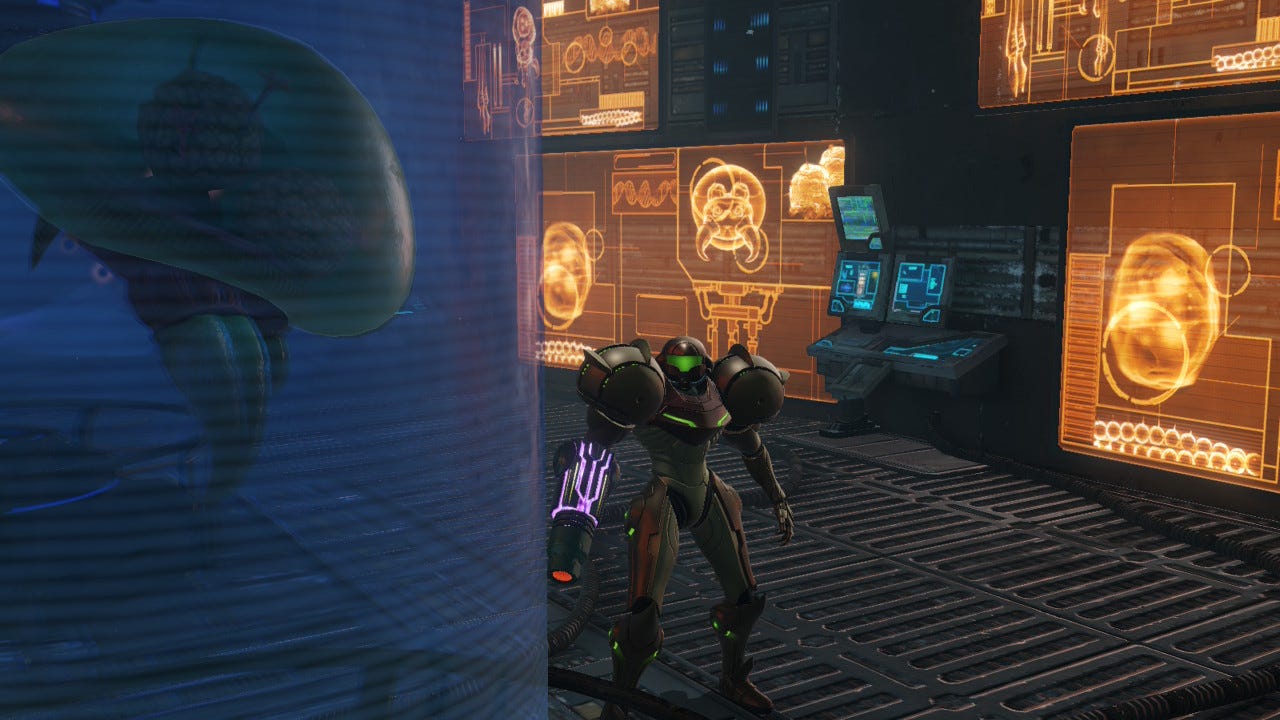
Ahead of the release of Metroid Prime 4: Beyond1 later this week, I’ve been playing earlier games in Nintendo and Retro Studios’ series of first-person adventures.
The original Prime launched on GameCube in 2002, evolving what had been a series of 2D sci-fi action-exploration games into slower-paced sci-fi archaeology expeditions—with the occasional battles against aliens mixed in.
I didn’t review the first Prime when it launched but finally did for Kotaku in 2016. At the time, I wrote:
Prime’s presentation of a world seen through a visored helmet was designed for maximum immersion. You aren’t supposed to feel like you are controlling a video game character. You are supposed to feel like you are Samus Aran, and that the things happening to her are happening to you.
When you explore the lava-filled Magmoor Caverns, jets of steam briefly fog your view.
When an electrified enemy attacks you, your display cuts to static.
When you finally gain the ability to see the world as one giant X-Ray and reflexively put your/her hand up while getting shot by an enemy, you’ll see her—your—bones.
When light flashes just the right way, you see yourself.
These would all be mere high-tech parlor tricks if they didn’t serve the purpose of establishing Metroid Prime as the world’s first great Samus Aran Simulator. We are Samus, chasing space pirates and the monster Ridley onto the alien world of Tallon IV, where we will scan flora and fauna to determine what is what. We are Samus, wasting few words as we slowly upgrade our suit so we can see heat signatures, shoot freeze beams and extend a grappling hook made of energy. We have what she’d have: a map, a brain and impeccable aim.
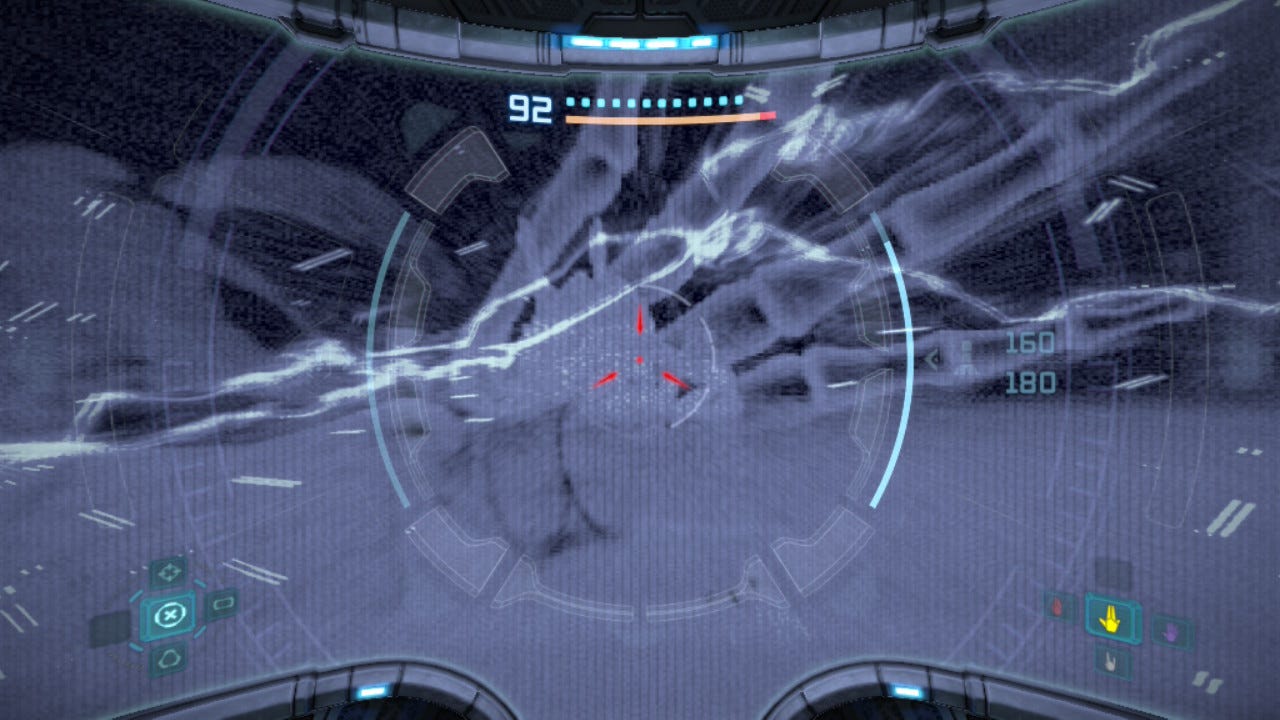
Over the last couple of weeks, I replayed Prime for the first time since 2016, this time via the 2023 Switch overhaul, Metroid Prime Remastered. As noted in a terrific new artbook about the trilogy, Retro’s goal for Remastered was that “it should look the way Metroid Prime looks in your memories.” That’s a reasonable target, but, fond as my memories of the 2002 original were, even I could tell that the GameCube edition never looked as good as the Switch remake. Technically, the newer version is a stunner, though it benefits from the superb art direction of the original. The makers of the Prime games give each room, cavern and cliff in the game a distinct, memorable look. And nearly every one of them doubles as a fantastic puzzle.
Here is just a small portion of one of my favorite sequences in the game, featuring Samus in her signature morph ball form, just before some magnetic rolling across the walls. The challenge isn’t overly complex, but the look, the sound, the action that you’re doing combine so well:
(As I wrote in that 2016 Kotaku review: “The morph ball is pure video game, allowing a single button press to change you from Space Indiana Jones to Space Boulder.”)
During my Remastered playthrough, only two parts of Prime 1 dragged for me. There’s a long mid-game quest for an upgraded suit of armor that is tedious—perhaps intentionally so, given how empowering that suit then feels to use. Then there’s the game’s penultimate boss battle, which has a punishing final phase. Many players won’t beat it the first time, requiring lengthy replays before getting to the really hard part. (A fascinating detail from the art book: Prime producer Kensuke Tanabe said disagreements between Retro and Nintendo HQ about the design of that boss fight caused one meeting on the topic to stretch from morning until “the sun was setting.” Dare I wish the meeting had gone even longer?)
After clearing Prime 1, I started Prime 2. I doubt I’ll finish it before 4 arrives, and don’t even ask me when I’ll get back to 3. But the backtrack through the series has, so far, been a great ride.
Prime 4 was originally going to be developed by Bandai Namco, possibly even by the Singapore studio (reportedly; never officially confirmed), before the series and that project shifted back to Retro.
Interesting write up on Nintendo’s history of acquisitions! I also loved reading the Prime 1 revisit. I want to play the original after I go through Prime 4. It’ll be fun to see just how much is the same and what differences there are.
I enjoyed the run down of acquisitions by Nintendo, this isn’t something I typically follow. Regardless, your article helped understand how they may appeal to Nintendo. Thanks for writing this.