

'The big things that we're thinking about'
In an exclusive interview with Game File, new(ish) Xbox boss Asha Sharma and Xbox chief content officer Matt Booty explain their vision for Microsoft’s gaming division


In a memo to Microsoft’s video game team yesterday, the company’s new CEO of Xbox, Asha Sharma, along with Xbox chief content officer Matt Booty, laid out some goals.
The Xbox platform “will be built to be affordable, personal, and open,” they wrote.
Their team would be called “Xbox” again, dropping the “Microsoft Gaming” moniker of recent years.
That Xbox team would, among other things, work to “fortify Game Pass” with “sustainable economics,” “strengthen our 5-year slate” of games and “stabilize Gen9” (their Xbox Series consoles) “as a healthy and high-quality base.”
The memo even briefly addressed some of the biggest questions around Xbox since Microsoft announced in February that Sharma would be replacing Phil Spencer, Xbox’s boss of the past 12 years: whether to continue Microsoft’s recent effort to bring more Xbox/PC-centric games and franchises to rival PlayStation. The Xbox team “will reevaluate our approach to exclusivity, windowing, and AI, and share more as we learn and decide,” they wrote.
So, what’s that all mean?
Yesterday afternoon, I connected with Sharma and Booty via a video call. Over the course of a 28-minute interview, I asked if they could elaborate.
Note: This article is free for all Game File readers, but I’ve also published the interview transcript for paying Game File subscribers, if you want to read about our exchanges in greater depth. Not a subscriber? You can sign up directly via the article or on Game File’s subscription sign-up page.
Fortifying Game Pass, Sharma told me, meant that, “to grow a subscription business, you need more players who love the subscription, that are staying longer and that are happy.”
She pointed to Monday’s announcement of a price reduction on the recently price-hiked Game Pass subscription service. With that came the change that new Call of Duty games will now be excluded from the service until they’re out for a year.
“We think that this decision is going to give us all three of those,” she said.
Sharma’s desire for Game Pass subscribers to stay longer suggests to me that, however many people as Call of Duty may have brought in when Black Ops 6 launched in 2024, those new subscribers just might not have stuck around.
“We've been thinking about Game Pass in two steps,” she said. “One is just: let's make sure it's affordable, which we addressed. The second is: what does value look like eight years later after the advent of Game Pass and the world changing around us and the next generation coming online? And so we're exploring a number of different things.”
Shortly after we spoke, one of those explorations appeared to leak, per The Verge: A 50-game Game Pass “Starter Edition” bundled with Discord’s Nitro service.
Strengthening the five-year slate, Booty told me, meant building on some fundamentals for Xbox’s games and game studios: “Predictable cadence, robust roadmap, aim for quality.”
I pressed him on whether Microsoft, which had recently seemed to solve its gaming drought problem, was aiming to improve game quality and create more bona fide Game of the Year contenders. Other game publishers keep claiming those trophies, I said. Nailing those fundamentals, he said, could “create the conditions for the lightning in a bottle of winning Game of the Year.”
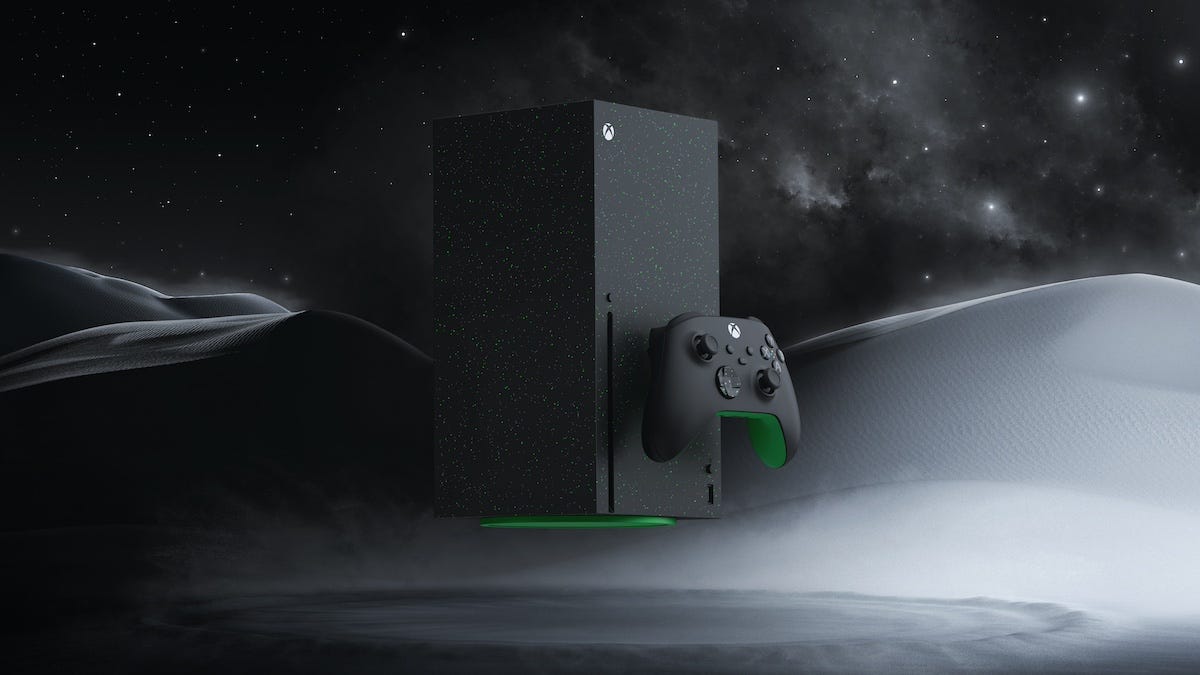
And what exactly did an effort to “stabilize Gen 9” Xbox Series consoles involve?
“We have formed a team [and] we’re investing in console features,” Sharma said. “We are standing up the muscle to make sure that all of our performance and reliability and quality is great. We are investing in it as a first-class experience again, and we want to make sure that all the players who want to be on Gen 9 are on Gen 9 with a great console with regular updates.”
She teased that there were more updates coming, but didn’t want to get ahead of their announcements. “I think that the Gen 9 is a great piece of hardware, and we want to make sure that gameplay and the platform experience is excellent. We know we just haven’t invested as much there and so we’re getting back to that.”
As for those hottest of topics, Sharma and Booty had no additional info to share with me about exclusivity. No calls made yet. Choices around Xbox’s approach to exclusive games are “long-swinging decisions that have decade-long impact,” Sharma said.
“We’ll take a data-driven approach and a strategic-driven approach, and then we’ll look at our principles and we’ll make some calls. So we’ll share more when we’re ready,” she said.
I specifically asked if they had a timeframe for making a decision. “Nothing we’re ready to commit to,” she said, pointing out that she was in her role for only about 60 days.
She wasn’t going to rush it: “I want to make the right decision, not the fastest decision.”

A deliberate pace is what you might expect from the new leader of a sprawling gaming division that is responsible for Xbox, Halo, Call of Duty, Candy Crush, Minecraft, World of Warcraft, Fallout, Forza, and much more.
But Sharma, with Booty, a 16-year Xbox veteran at her side, has made her mark quickly.
On the 14th day since Microsoft announced she’d be running its game team, Sharma announced Project Helix, the codename for Microsoft’s in-development next-gen console.
On day 35, Microsoft confirmed that Sharma had retired the company’s controversial “This is an Xbox” ad campaign that de-emphasized the centrality of playing Xbox games on an Xbox console.
On day 60, she announced the Game Pass price cut and the removal of Call of Duty from its day-and-date offerings.
The memo (and our interview) was on day 62.
I was curious if Sharma had been given a mandate when she took the job.
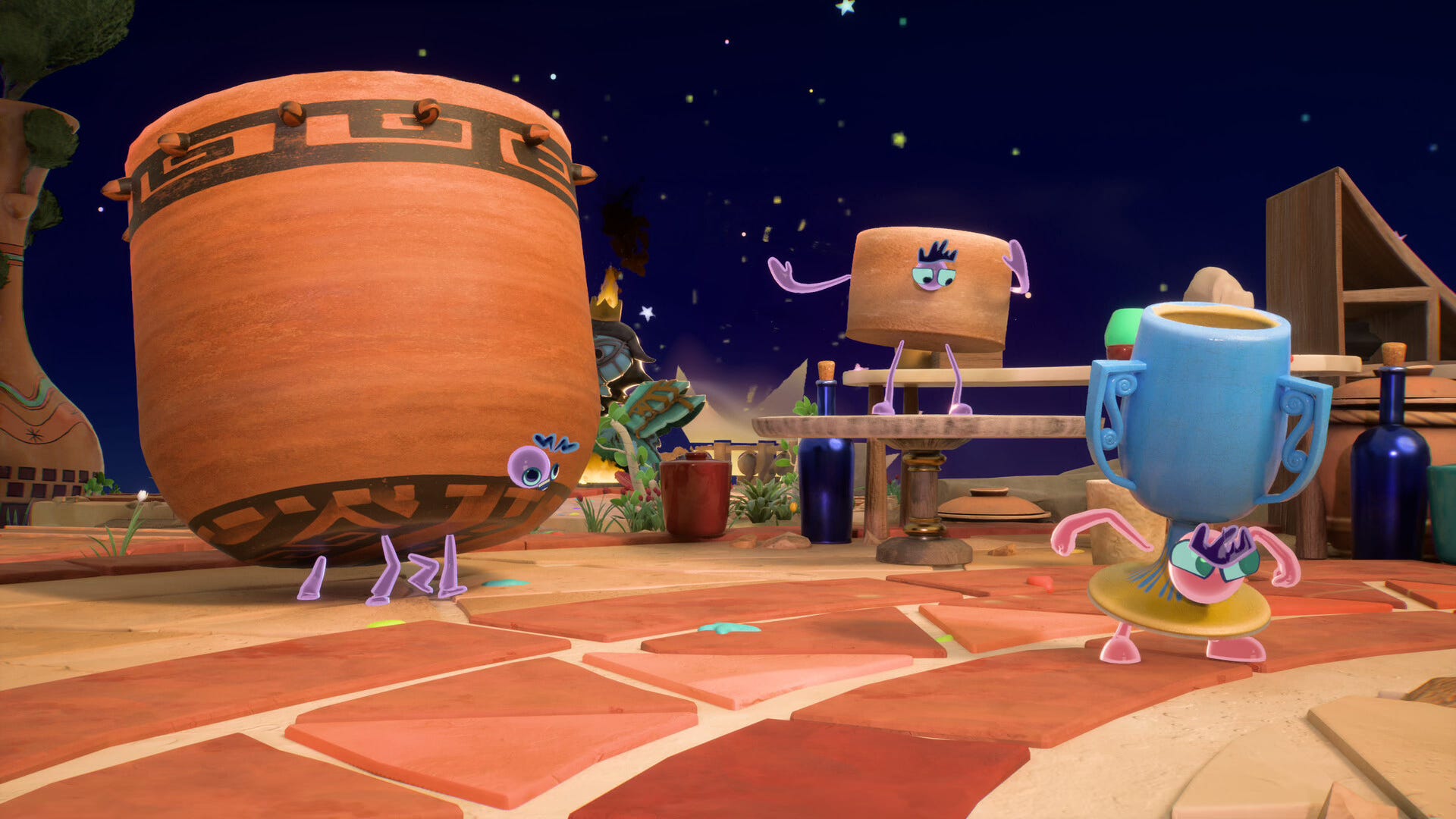
“The big things that we’re thinking about are we want to make great games,” she said, pointing out a Peabody Award win this week for South of Midnight, the release of Double Fine’s multiplayer pottery brawler Kiln that day as well.
“The ‘’Return of Xbox’ really came from an ethos of: We have to restore the core,” she continued. She was referring to a phrase she used in her note in late February when she introduced herself to her team and the gaming world. “We have to restore the core fundamentals of our product and console. We have to restore the core and increase our strength on PC. We need to overhaul discovery and search, etcetera.”
Before taking the Xbox job, Sharma was a top executive at the start-up Porch, then Meta and Instacart, then re-joined Microsoft in 2024 to run an AI team. She said she’d meet regularly with Microsoft CEO Satya Nadella and that, during a session in his office, the possibility of the Xbox job came up.
“What he shared was, as we are looking out for, you know, 10 years, this is a very critical audience and category to the company. And we have one of the most incredible brands and portfolios in entertainment. And so he thought this would be a great opportunity for me to learn, a great opportunity for me to partner with Matt with my consumer background. He’s obviously got a longstanding history in content and gaming. [Satya] said that this was really important to the company’s future, and so I thought that was an incredible experience.”
She also liked the idea of working on something consumer-facing, with the broader public as your potential customers. “You have to earn every player every day, every hour,” she said. “And so it’s been really awesome getting back to that energy.”
(A mystery solved: In March, I reported that Sharma had done some Xbox work during her original 2011-2013 stint at the company. What’d that involve? “I was there for a short moment doing some sports and influencer marketing at the time,” she said.)
Plenty of Sharma and Booty’s memo is optimistic and meant to inspire the company’s games team, but it’s not all positives. And some of its terms are certainly open to interpretation.
“Players are frustrated,” they state in the memo. “Our presence on PC isn’t strong enough. Pricing is getting harder for people to keep up with.”
They describe Xbox as a “challenger,” an acknowledgment that, however mighty some parts of its business are, its competitors have the lead.
From the outside, I could appreciate the words of support for Gen 9 Xbox Series consoles, but I noted to Sharma and Booty that Xbox console sales have been in decline. Microsoft’s quarterly earnings updates have shown years of hardware revenue drops. Did Sharma expect Series console sales to go back up?
“I can’t share guidance on what’s going to happen in general,” she said. “We are wanting to see Xbox return to growth next year, and so we’ve got work to do.” (That’s the Xbox division returning to growth, she’d later clarify.) “There’s no silver bullets, and our focus is going to be: how many players are playing every single day in the Xbox ecosystem?”
The memo also talks about Xbox being built to be “open,” which tripped me up. I initially took it as a reference to the kind of approach the public saw last year for the Xbox-branded portable, the ROG Xbox Ally. That device, made by Asus in partnership with Microsoft, includes the Xbox PC marketplace right next to Valve’s dominant Steam service (as a result, it’s an Xbox-branded device on which I can play the Steam version of PlayStation’s God of War). The Ally hinted at a more open-platform approach for Xbox.
Then there was a line in Sharma and Booty’s memo about the next-gen Project Helix and how it would “play your console and PC games.”
In early February, a few weeks before Microsoft announced Spencer’s exit and Sharma taking over, Epic’s Steve Allison, who runs his company’s PC marketplace, told me he expected the Epic Game Store to be on Microsoft’s next console: “Unless their policy or stance on it changes, they are telling us they’re going to welcome that,” he said at the time.
I wasn’t sure if that was the kind of “open” thing the memo was hinting at, and, I’d been scratching my head for some time about how it would be economically viable to let other storefronts operate on its hardware.
Sharma pulled me back a bit from all of this.
“So what we shared with our team is that we want the platform to be open for more people to create on the platform and more players to participate in customizing and extending that,” Sharma said.
But an open platform approach as with the Xbox Ally as well? I cited Allison’s comments about what Microsoft’s plans for the future Xbox hardware had been, at least under the prior regime.
“I wasn’t part of those conversations, so we’ll make those decisions going forward as a team and with our partners,” Sharma said. “We’ll share more when we can.”
And then there’s Sharma and Booty’s intriguing pledge in their memo for Xbox to be “affordable.”
This week started with a Game Pass price reduction. That’s part of Microsoft’s Xbox gaming business. So, too, is Xbox hardware, which, as with rival consoles, has had price increases.
“I think that there’s a lot of different people around the world that have different needs,” Sharma told me, as I prompted her about what affordability looks like at Xbox, especially given that one of its products is a console, which can be expensive.
“I think, historically, our pricing hasn’t been as flexible,” she said. “And I think that’s the big thing we want to go work on. You saw that with Game Pass. It had become too expensive. So we took a step to address that.”
She added: “I want to continue to make sure, as we build hardware, software, services, we’re spending just as much time on performance and play time as we are on making sure that we can innovate to offer more affordable devices and hardware and services. And so, look, there’s a reality to the market that we’re in, so there’s no promises around what the price points are or anything like that. But I want to make sure that people around the world are able to play.”
The gaming business is changing radically these days. Signs of stress are everywhere, as studios are shut down, developers are laid off, the plug is pulled on faltering games quickly after they launch.
In their memo, Sharma and Booty talked about competition for players’ attention. The mentioned hit games emerging from tiny teams of developers and even from bigger teams outside of traditional markets, but whose work competes with “the most established Western studios.”
They described an industry that is reshaping.
“Players have access to more games than ever, even as the cost and time to build blockbuster titles continues to rise, putting pressure on what gets made and how risk is taken.”
Given that, I wondered if Sharma and Booty felt there were any hard truths that they thought Xbox fans needed to understand about where gaming is going.
“I would just turn around and say it’s on us to understand the fans,” Booty said. “Our job is to…build what the fans want to play and create places for them to play, and worlds to explore.
“So the understanding is for us to think about how the expectations have changed around how social games are, around the approachability, how easy they are to get into, about the balance between satisfying the core that wants really sweaty, hard games, but making sure we don’t lock people out that want to join for the first time.”
He added: “I think player habits, competition for attention, expectations about where and how they play, these are all changing. And we’re putting a lot of energy across our teams into really understanding and delivering what players want.”
So, what does success at Xbox look like?
“Xbox will be where the world plays,” Sharma said. “And we’re going to do that across our full stack platform.”
Correction - April 24, 7pm: Xbox dropped the price of Game Pass on the 60th day after Sharma was announced Xbox’s new boss, not the 59th.
Great get with the interview! Look forward to reading the transcript.
It’s interesting. So much of Xbox is big decisions that take years to materialise into something. Will be fascinating to see — aside from the price drop — what else they do to win back their core customers in the short term.
If they bring back exclusives, and include multiple storefronts on project helix, I think it will actually compete for the next generation. Insiders are saying that project helix will considerably outspec the next PlayStation. So if we got the most powerful console with the addition of pc storefronts, and can also bring your entire library of games with you, that is like the dream console I’ve always wanted. Will finially be able to check out the last of us and god of war, see what all the fuss is about lol. Great job with the interview, and I have been very impressed with Asha sharma so far. If she brings back exclusives, she will save Xbox