

Game File, two years in
What’s going well, what keeps me up at night, and which countries and states love Game File the most

The second year of Game File is in the books. It went pretty well, I think. Year Two saw Game File’s…
… tallest chart, a 15,009-pixel skyscraper comparing the towering compensation of EA CEO Andrew Wilson with that of EA’s average worker
… first three-part article, in which I interviewed the CEO of Saber Interactive during a California-New Jersey flight aboard his private jet (part 1, 2, 3)
… first freelance articles, as I started some year three expansion plans a bit early (more on that below)
… first suspicious freelance pitches … were they written by AI? I’m still investigating!
… first legal threat… how exciting! (it’s been resolved, with no action needed)
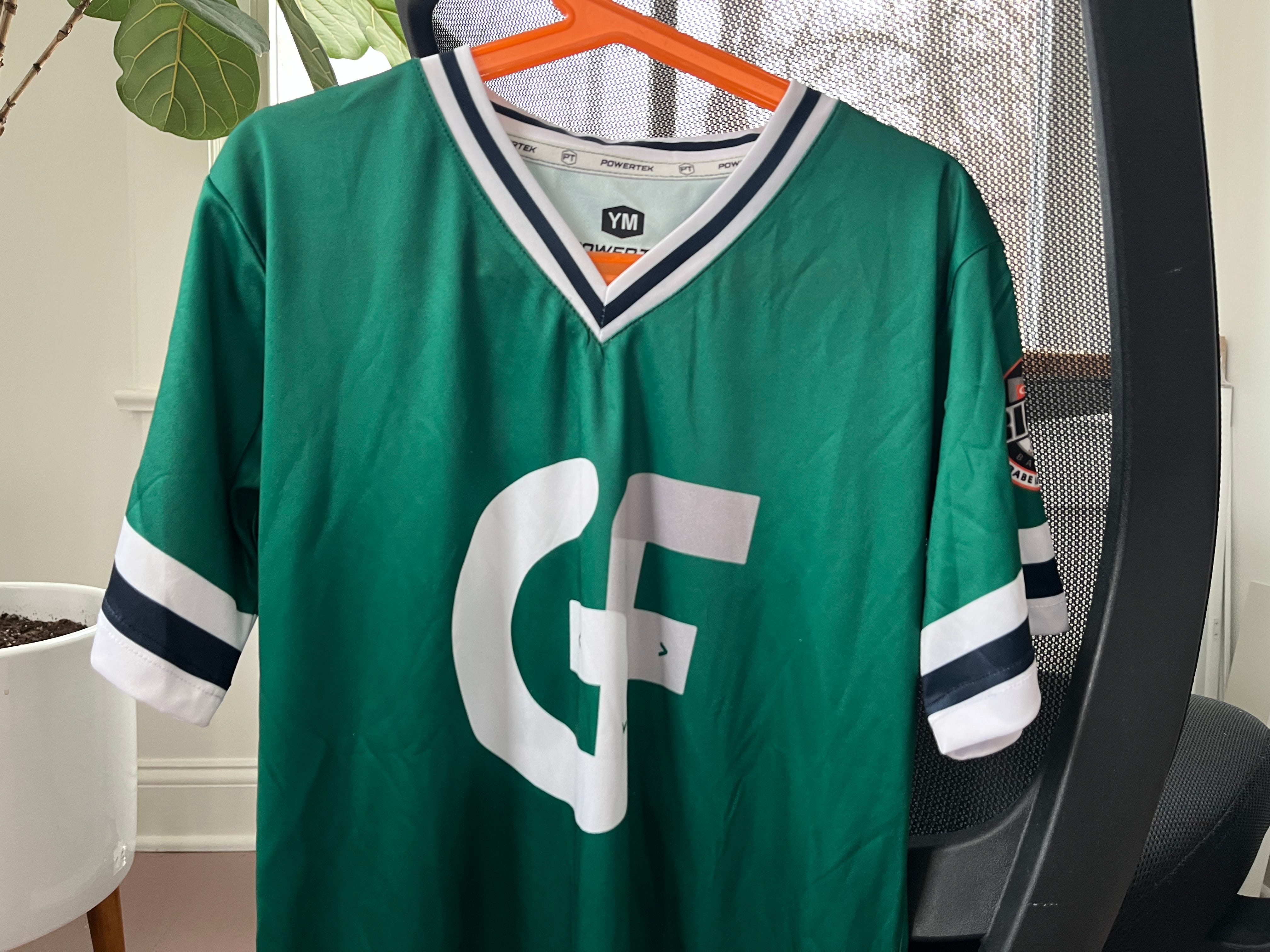
…first baseball jersey (pictured above), as I sponsored my son’s baseball team for nine-year-olds
Back on January 14, 2025, I wrote about Game File’s first year and how running this website/newsletter/news organization has been a dream come true.
I love games. I love journalism. I love being able to work on the combo of the two for a living.
I am extremely grateful to everyone who has paid to subscribe! (And totally get that, for some of you, it’s just not an option now. If you do want to subscribe, here’s where to do it.)
I’ve now been covering video games full-time, continuously, since 2005 (MTV News, then Kotaku, then Axios). I started Game File two years ago after being laid off and decided to take more direct control of my destiny. I’d experienced just enough instability in the media business that I wanted to see if I could continue my work via the direct financial support of readers, rather than having to wonder if the company I worked for was going to pivot or fall apart.
Things are going well, but Game File is not quite where I want it to be. I’ll explain my current goals in a bit.
I also want to use these annual updates to provide transparency 1) for subscribers and readers, so you understand what your attention and support is leading to, and 2) for anyone out there trying to make a living in journalism, so that they can have more info about how this kind of reader-backed approach is going.
Some stats:
Game File remains, based on discussions with my peers, the 2nd highest-grossing gaming publication on Substack, my current publishing platform.
Game File is the 39th highest-grossing “culture” publication on Substack (up from last year’s 43rd).
At two (or so) years in, Game File has over 25,000 subscribers—free and paid (up from last year’s 17,000).
Game File currently has just over 1,400 paid subscribers. (Up from 1,079 a year ago; I’d been aiming for 1,500 for year two, so this is a miss).
All posts are read directly by a mix of email subscribers, app subscribers and folks reading online. Traffic on free and paid posts therefore differs from the subscriber numbers—and even paid posts are also read via free previews of the paid posts and/or free trial subscriptions. So… page view traffic on posts ranges from 16,000 on the low end to 43,000 (highest free post) and 75,000 (highest paid post). These are all higher marks than a year ago.
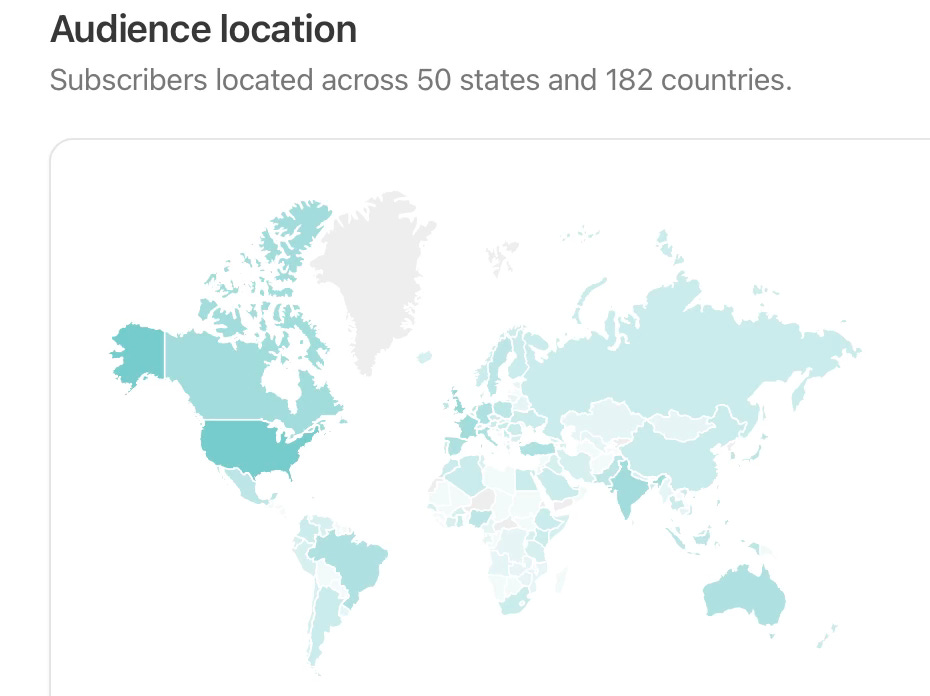
There are Game File subscribers in all 50 states, according to Substack (thank you to the 2,358 of you in California and the five apiece in North and South Dakota!)
And Substack indicates that there are Game File subscribers in 182 countries (that includes more than 2,000 in the UK, more than 800 in India, 26 in Iran and 1 in Libya. None in Greenland, and, hey, I don’t blame you, Greenland. These are tense times.)
An update on something I was worried about
Last year, I fretted about the occasional dips in Game File subscriber growth and the then-looming hazard of annual subscriber churn.
While a third of Game File’s posts are free, readers can pay $10/month or $100/year to read every edition in full.
Monthly subscribers come and go, sometimes dipping in after a free trial to read a high-interest article, then quickly cycling out. Annual subscribers, by the nature of their subscription, are here for a while. Once I hit the anniversary of Game File’s December 2023 soft launch I knew I might sometimes see annual subscribers dropping out. I was unsure how much that would happen in year two.
Well, year two has certainly seen a lot of churn. Game File paid subscriptions continue to grow, but they’re growing more slowly than they did in year one. Discontinued subscriptions negate some of the gains of new subscribers. On Substack’s back-end, I can see how many subscriptions each edition of Game File directly generated. That helps me see which stories are exciting new readers enough to compel them to pay. But, in year two, I’ve seen weeks of terrific new paid subscriber growth dragged down by other paid subscriptions ending.
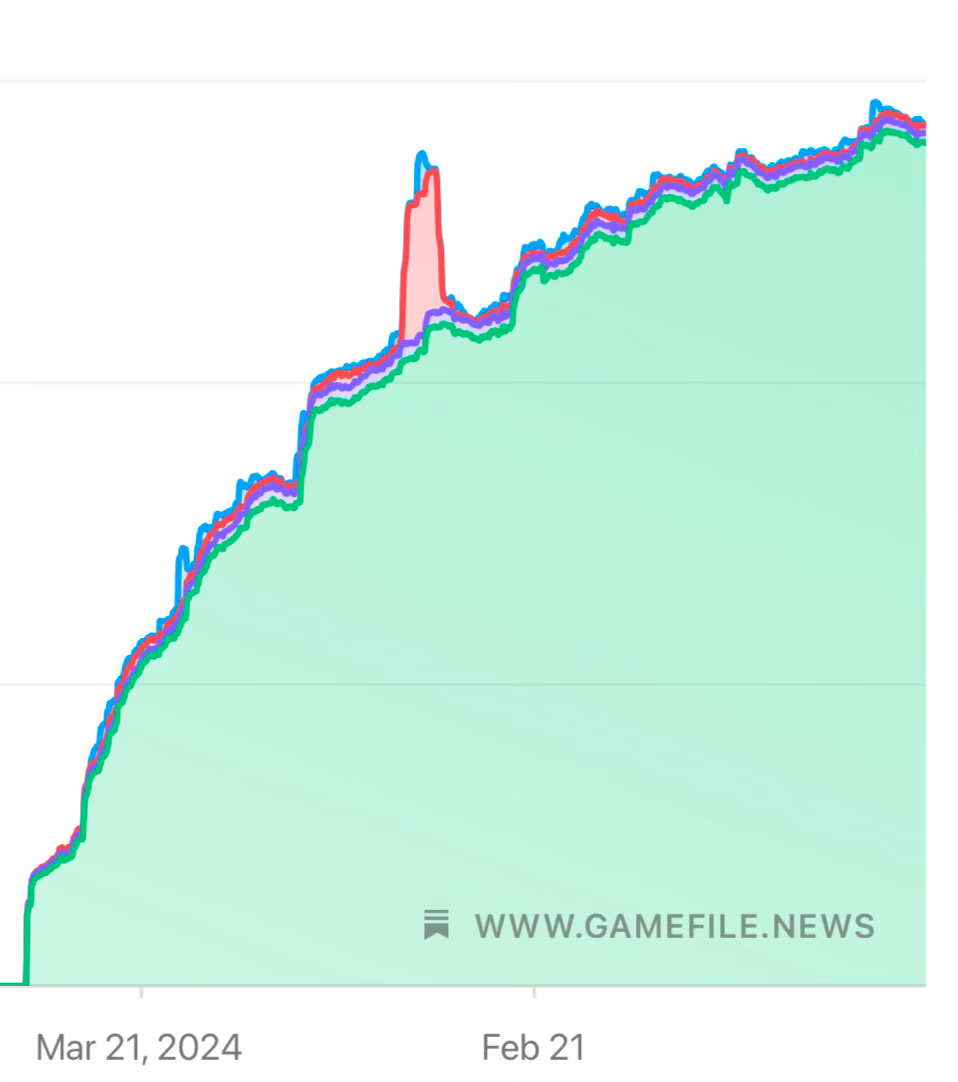
Below is the paid subscriber chart since Game File launched. Year two begins just after that spike on orange (that was a special one-month promotion Substack did in late 2024, when they paid for one-month gift subscriptions for readers). You’ll see that paid subs are still going up, but more slowly thanks to that undertow of churn.
Most people don’t say why they’re cancelling a paid sub, but a few leave notes. People will mention changes in circumstances and a need to cut back on their subscriptions. Someone mentioned prepping for the birth of their next kid; another said they were laid off. One person’s cancellation notice stated: “DEI non-sense.” Not broken-hearted over that one.
The economy is tough for people right now, so I consider myself fortunate to see any subscriber growth at all.
At one point during year two, a person in the games industry who is familiar with a popular subscription service told me that “retention” was going to be a key part of my business going forward. Totally right.
I’ve expanded my mindset from focusing on how many subscribers each new article adds to also recognizing the value in a story that gives paying readers reason to stick around (and, ideally, eventually renew).
I’m also happy to reaffirm a key conclusion I shared after my first year: people pay for original reporting. Every single time.
A new worry
How much can Game File grow? I dream of the day that Game File can be a stable platform not just for my journalism but for plenty of others’. I made tiny progress toward that goal in year two; I just am not sure how much more is possible.
Some context: Jobs covering video games are scarce. This month alone, Rolling Stone dropped its games writer, The Verge laid off its games reporter and Inverse killed its video game section.
This has been happening a lot.
Last spring, Vox Media sold Polygon, costing several terrific reporters, editors, critics and producers their jobs. In response, I launched a freelance program at Game File, far earlier than it was financially responsible to do so. I hated seeing talented journalists lose their platform and wanted to extend Game File as a safety net.
I hadn’t planned to open Game File to freelance writers until year three, by which time I’d hoped that Game File’s annual revenue would match my previous job’s salary. I then planned to allot “surplus” revenue to a freelance budget that I could tap into without having to sweat how well those freelance pieces performed.
Instead, in May 2025, I announced a Game File freelance program for year two, with a structure designed to benefit readers and writers alike, without kneecapping the site. I’d pay freelancers a fair, guaranteed rate ($300 minimum), plus a quarter of revenue from any annual subscriptions that Game File gained in the 24 hours after their story ran. I announced that system publicly. I figured it might encourage people to support any Game File freelancers, would be good for the writers themselves and might provide a sustainable model for others to try. The system would guarantee that, if a freelance post blew up, the writer would get more of that greater success.
I published six freelance articles under this system in year two. That includes Nicole Carpenter being ahead of the curve on Grow a Garden and Joshua Rivera reviewing Blippo+. Most earned more than the base rate, and they collectively earned their money back. That was very cool!
But the freelance system hasn’t dramatically increased the pace of subscriber growth which, for aforementioned reasons, slowed in year two. As I start year three, I’m still not quite at a spot where I can simply dedicate a portion of Game File revenue to freelance and not fret about it. I’m close, but not there.
I worry that I won’t make big progress here, that I will eventually close year three with, at best, a meager freelance budget. And, now that I’ve gotten a taste for what it’s like to have added voices on the site, I can’t help but imagine what it would be like to have a second voice here full-time. For that, we’re talking about likely needing to double Game File’s paid subscriber growth. I’m honestly not sure how to do that in anything but a slow and steady way. My hunch is that I need to market Game File more… spread the word about the site to more places. But marketing isn’t my thing, and I spend most of my work time reporting, writing, self-editing, working with a freelancer here and there, doing customer support and, oh yeah, playing games I need to understand well enough to cover.
My theory (and what I would do with more paid subs): Faster growth would allow me to bring in more freelancers and commission some blockbuster reporting. That reporting would likely generate more subscribers, enabling more guest reporting and guest reviews. Etc.
I know some of you are here just for my work. I want to enhance that, too. I’d like to be able to allocate more budget to reporting trips. Each time I hit the road for work, I get some terrific stories, tips and new contacts.
A note about finances
If you do the math, you may observe that having 1400 paying subscribers for a $10/month or $100/year subscription service means Game File is generating over $140,000. It is, which is great. I cannot complain!
That said, the number isn’t quite as good as it might initially look. 10% of that goes to Substack, 3% to my payment processor Stripe and a healthy chunk goes to taxes.
I pay for all my work travel, something that in previous jobs, would not have come out of my salary. For example, last February, I spent about $1500 to attend the DICE Summit in Las Vegas (and came out of it with interviews with Riot Games’ co-founder, the person in charge of Diablo, others, and tips for stories). I spent a little more than that attending 2025’s Game Developers Conference in San Francisco (where, among other things, I got one of the year’s most popular Game File articles, an accidental exclusive about PlayStation’s internal game preservation program). I went on five work trips in year two, up from four the first year.
Another expense my employers used to pay for: I spend about $150 a month on securing court filings of cases I might cover. These were the source of year-two scoops such as the inside story of a Star Wars game DLC’s contentious cancellation and the unusual lawsuit about it; Bobby Kotick’s extensive reaction to a lawsuit over Activision’s sale to Microsoft; Sony’s legal counter-punch to a developer it fired; Nintendo’s pressure on an unrepentant streamer; and news of the classic conflict that is Naughty Dog vs. Naughty Cat.
And this year, of course, I spent some of my budget on freelance… about $2,500 worth.
I’m not claiming poverty and would strongly encourage anyone reading this to be thoughtful about spending your money to support the journalists whose work most badly needs a boost.
I also hope you’ll understand why gaining more paid subscriptions to Game File would be very, very helpful. It’d pay for more reporting, more reporters and provide more value to every paying reader.
So, what did I even do in year two?
In Game File’s second year, I published over 170 articles/newsletters, many with multiple items in them. This next stat is made up, but I’m pretty sure at least 95% of them heavily featured original reporting (or reviews).
I’m proud of the original reporting that runs in Game File. It would be easy to turn out three newsletters a week just rewriting press releases or other outlets’ coverage. There might even be value to some paying readers in getting efficient aggregation of all of that. Sure, I include a news round-up in most posts, but covering a bunch of reheated news would mostly bore me and waste your time and money.
You don’t read Game File to read aggregation of other reporters’ work. You read it, I hope, to find out something new.
This isn’t to say Game File didn’t cover the big stories. I previewed the Switch 2 (twice). I wrote about GTA VI’s delay and Xbox backing a handheld. I covered the Saudi-led bid for EA (and maybe was the first reporter to break down the official six-month timeline of the deal?). Nicole covered the crackdown on sex games at multiple gaming storefronts.
Beyond the stories that kept up with the big news—and aside from the many pieces that I’ve cited several already—here are some of my other Year Two Favorites. All of these were original stories, veritable Game File scoops, exclusives or whatever-you-want-to-call-it:
In February, sources told me about NetEase’s retreat from western gaming, and then, as the year progressed, I watched it pull funding from one studio after another.
My biggest scoop of the year: Ubisoft’s cancellation of an Assassin’s Creed game set during American Reconstruction (a story in which the “why” was probably more important than “what”)
Early in the year, I covered the U.S. Consumer Financial Protection Bureau’s plans to protect gamers from fraud and then, weeks later, I wrote about the new Trump administration’s swift efforts to destroy the agency.
I wrote about really cool games, including Eternal Strands, Blue Prince , Kaizen: A Factory Story, Spooky Express and News Tower (My kids helped with impressions of Split Fiction.)
I used six devices to review Assassin’s Creed Shadows (which I later decided I’d been playing wrong)
I calculated Nintendo’s most useful news
Thanks to a tweet I was tagged in, I spoke to the proud co-creator of an old EA game that had a cool trailer but never came out.
I showed how Take Two and, later, Microsoft, were removing mentions of diversity from their reports to shareholders.
I investigated the false gaming tips doled out by Google’s AI
I interviewed an anonymous Microsoft game developer about their unease over their company’s ties to the Israeli military
A lot of my reporting was remote, but not all. I think my best in-person piece of the year was my coverage of a game showcase and anti-ICE protests that were happening simultaneously in Los Angeles
I explained the three times my life intersected with Hulk Hogan’s.
I made seven charts about Capcom
I looked for the credits in 2025’s top video games and got the Palworld folks to explain their unusual crediting system.
I translated Ubisoft’s CEO’s testimony to French lawmakers (and, later, I had the scoop on him being challenged by a shareholder over “woke” games; and a scoop about Ubisoft’s unusual video chronicling how it dealt with Assassin’s Creed culture warriors)
I interviewed the head of gaming at Hasbro, the designer of Ball x Pit, and the writers of The Outer Worlds 2.
If a tough question needs to be asked, I’ll ask it, as I did during my uncomfortably-timed career-spanning interview with the co-founder of Sony studio Sucker Punch.
I didn’t nab any interviews with Nintendo about the Switch 2, but I think I got more third-party developers talking about their work on it than any other gaming outlet.
Netflix was interesting all year, including via scoops about their first gaming leader leaving and one of their game studios going indie again.
Game File readers themselves got to ask some of the world’s top game-makers questions, leading to a Waffle House query for an executive working on Tekken. (Other Game File interviewees got a chance to interview each other.)
Memorable quotes from interviewees:
“I am an honest person. I just say what I feel. I don’t want to talk around things or be too proud. From my experience, people appreciate that. Even when I say really harsh things, I say it because I’m trying to help.” – Sony’s former studio chief Shuhei Yoshida
“It’s quite cool that the workers of the institutions we are critiquing really get the game.” - Relooted developer Ben Myres on receiving positive response from people working at museums about his team’s game about stealing museums’ looted artifacts
“If you look at that list, I think it makes you feel a little bit uncomfortable” – Michael Frei, co-designer of Time Flies, on the country-by-country life expectancy data incorporated into the game
“It sounded like a good word to put on a t-shirt.” – Consume Me co-director Jenny Jiao Hsia, on the word Eggbo
“Don’t take that wrong, please.” – Larian Studios boss Sven Vincke, turning red after studio senior writer Adam Smith told me “part of my job is to make him excited.”
“We found that eight bucks is still five bucks” - Peak co-creator Nick Kaman (a quote that went viral and inspired some excellent blogging)
That’s year two. It was a blast.
You can find me here, sometimes in Game File’s reader chat and on social media.
I’m always interested in story ideas and tips. You can email me at stephen@gamefile.news or stephentotilo@protonmail.com (or if you receive Game File via email, just by replying—it goes right to me). I’m also happy to chat confidently with sources over Signal. You can reach out to get my number there.
Game File work is shared on social media, using my personal accounts: X/Twitter(not using that one as much), Threads (same), and Blue Sky (my preferred option).
Thank you to Ronald Gordon, Nicole Carpenter and Joshua Rivera for being Game File’s first freelancers.
And thank you again for everyone who has read Game File, subscribed, or told others about it. If you can keep doing any of that, please do!
Thank you so much for being public about your Game File stats! It worries me to see so many layoffs happen in the games media space, and it sounds difficult to expand the reach of your platform even with how your work impressively ranks among other similar Substack publications. But covering games is important work, and I love hearing about the behind the scenes of game development. The actual companies don’t give us that much of a look to begin with! Good luck with Year 3! Maybe you could partner with other outlets in some way? Thisweekinvideogames.com has seemingly been successful as the website launched just last year. It would be great to see more independent media working together to ensure the survival of the landscape.
Happy anniversary!!